

Artist Corner - George Rickey
George Warren Rickey (June 6, 1907 – July 17, 2002) was an American kinetic sculptor.
This post shares a sampling of the artist’s sculptures I’ve sighted in California and Hawaii.
From Wikipedia:
Rickey combined his love of engineering and mechanics by designing sculptures whose metal parts moved in response to the slightest air currents.
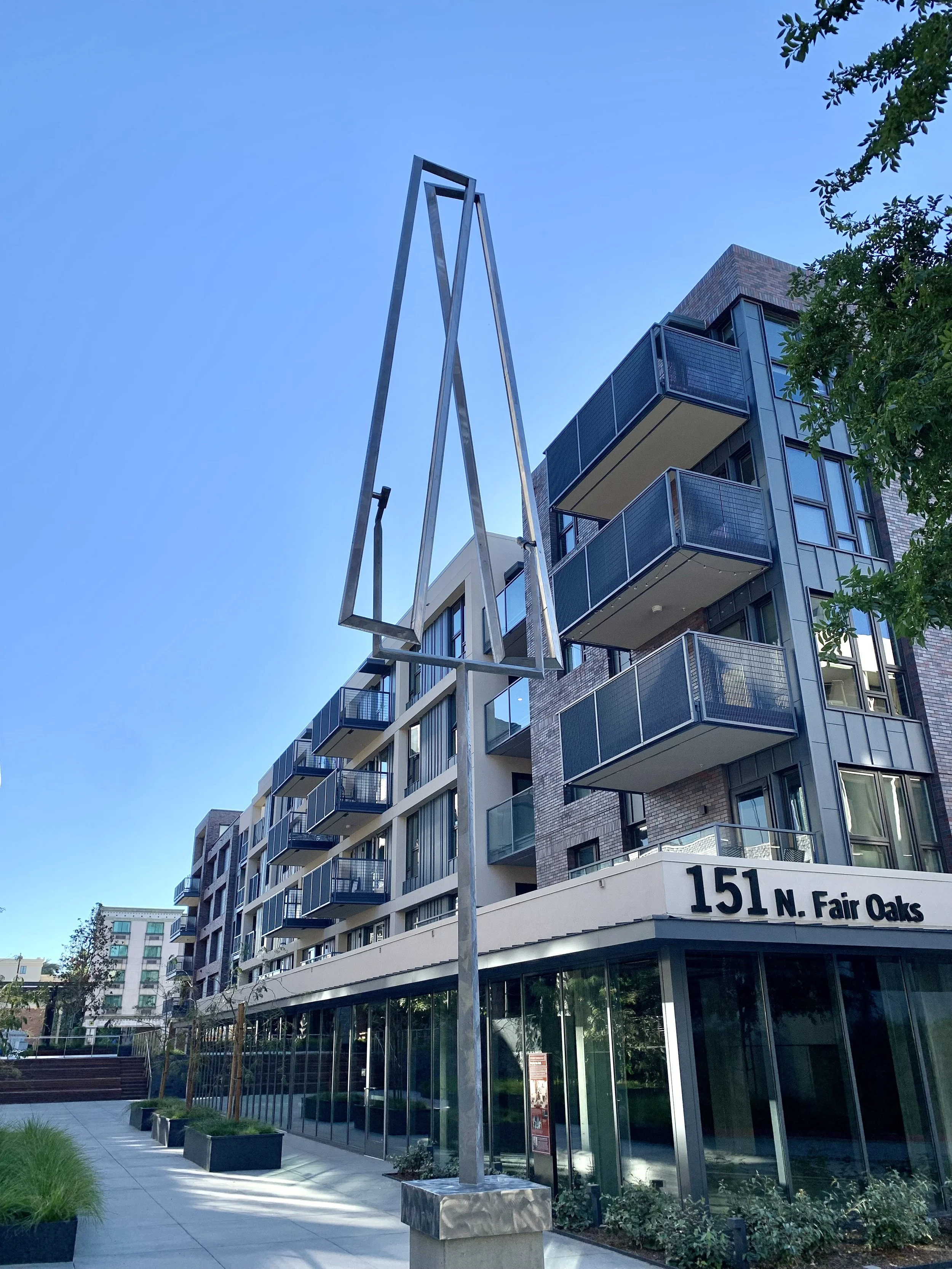
Two Open Rectangles Eccentric Variation VII Triangular Section, Pasadena
On a jog through Old Town Pasadena, I was pleased to discover that we have a local George Rickey sculpture when I spied it in the distance (image above).
There was a nearby plaque to confirm. Two Open Rectangles Eccentric Variation VII Triangular Section (1977) is relatively slow-moving compared to other Rickey sculptures, a reflection of the mild breezes in Pasadena.
Four Lines Oblique, Costa Mesa
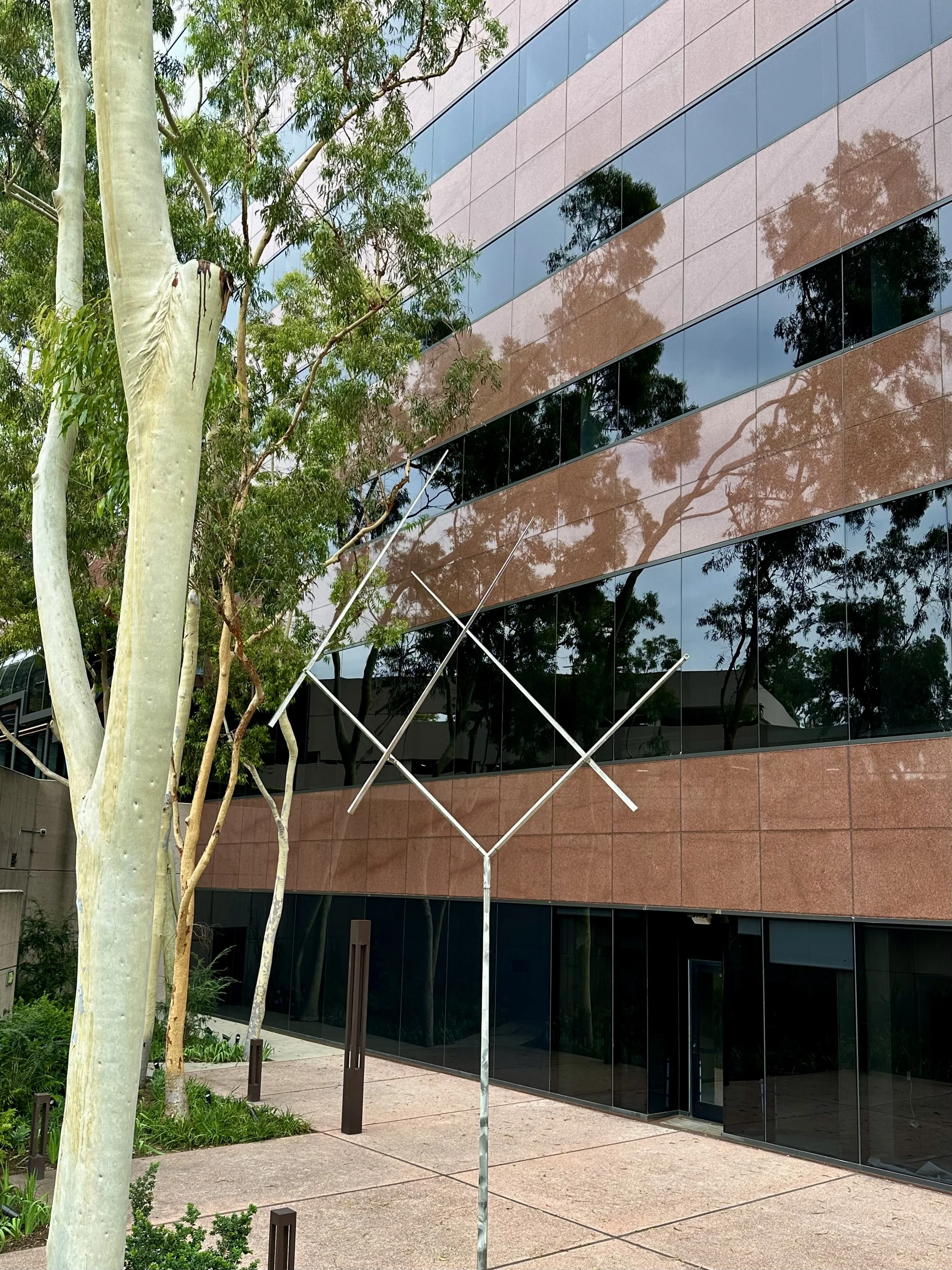
From henrysegerstrom.com:
Commissioned by Henry Segerstrom in 1973, Four Lines Oblique Gyratory – Square IV by George Rickey is a kinetic sculpture that moves constantly and seemingly spontaneously, sitting outside Center Tower. Rickey’s sculpture is a study in opposition: his forms are simple and orderly, yet their movement is complex and spontaneous; they are strong enough to withstand forceful winds yet light enough to be moved by the slightest breeze.
Three Squares Gyratory, Getty Center, Lower Terrace Garden, 1971
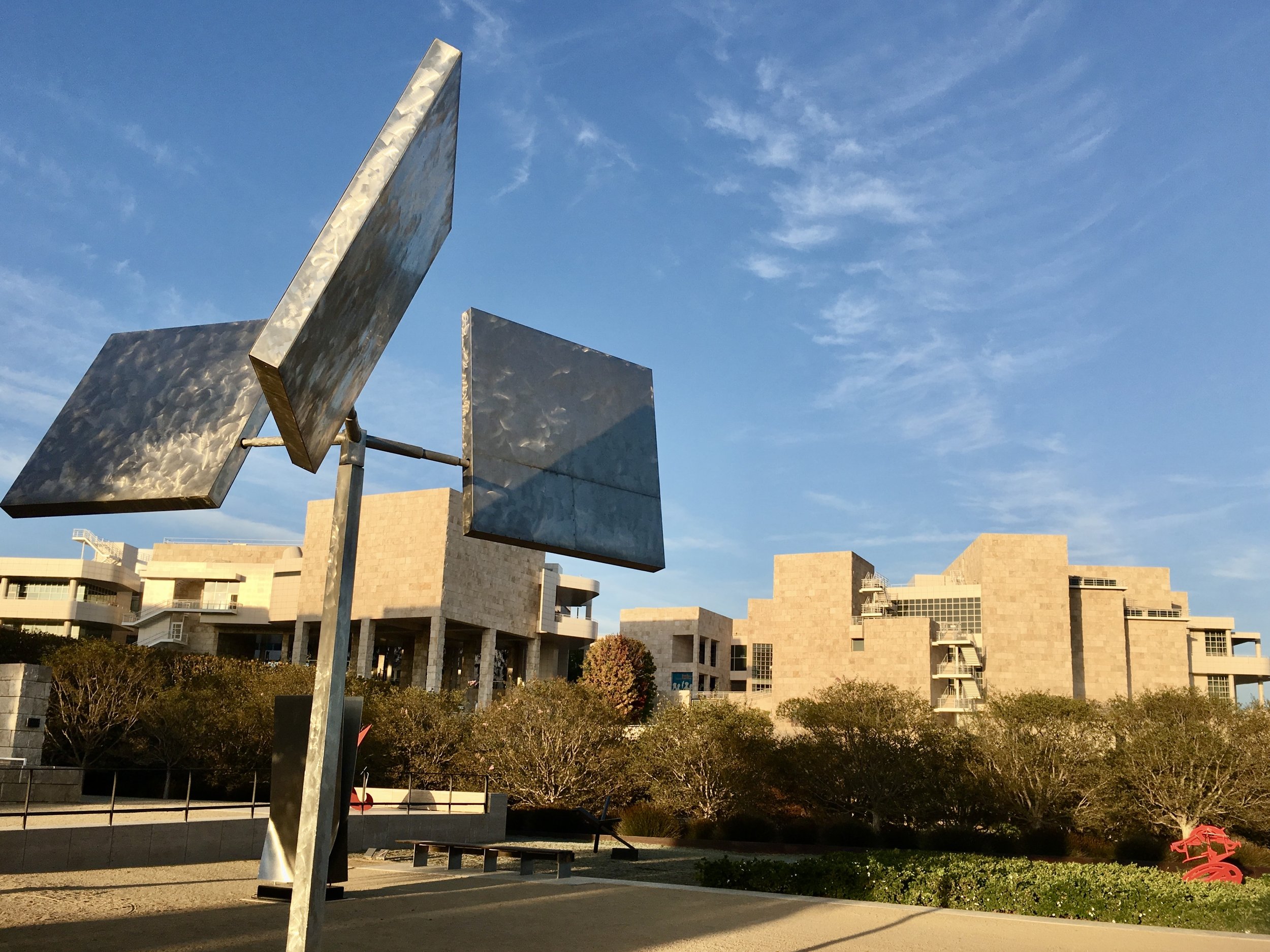
From the Getty Center website: Three large squares act as sails, catching the slightest breeze and setting this sculpture in motion. Spaced evenly apart from one another, the squares rotate around horizontal supports. These moving parts are attached to a central support about fourteen feet tall. Around this strong vertical axis, the squares move slowly--and randomly--in either direction. In 1965, Rickey began buffing the stainless steel planes of his sculptures to make them more responsive to motion and changes in ambient light. This technique made the movement of his work less predictable--encouraging the viewer to spend time observing his sculptures. Rickey's polishing process can be appreciated in the shimmering surface effects of this work.
Spaulding House, Honolulu
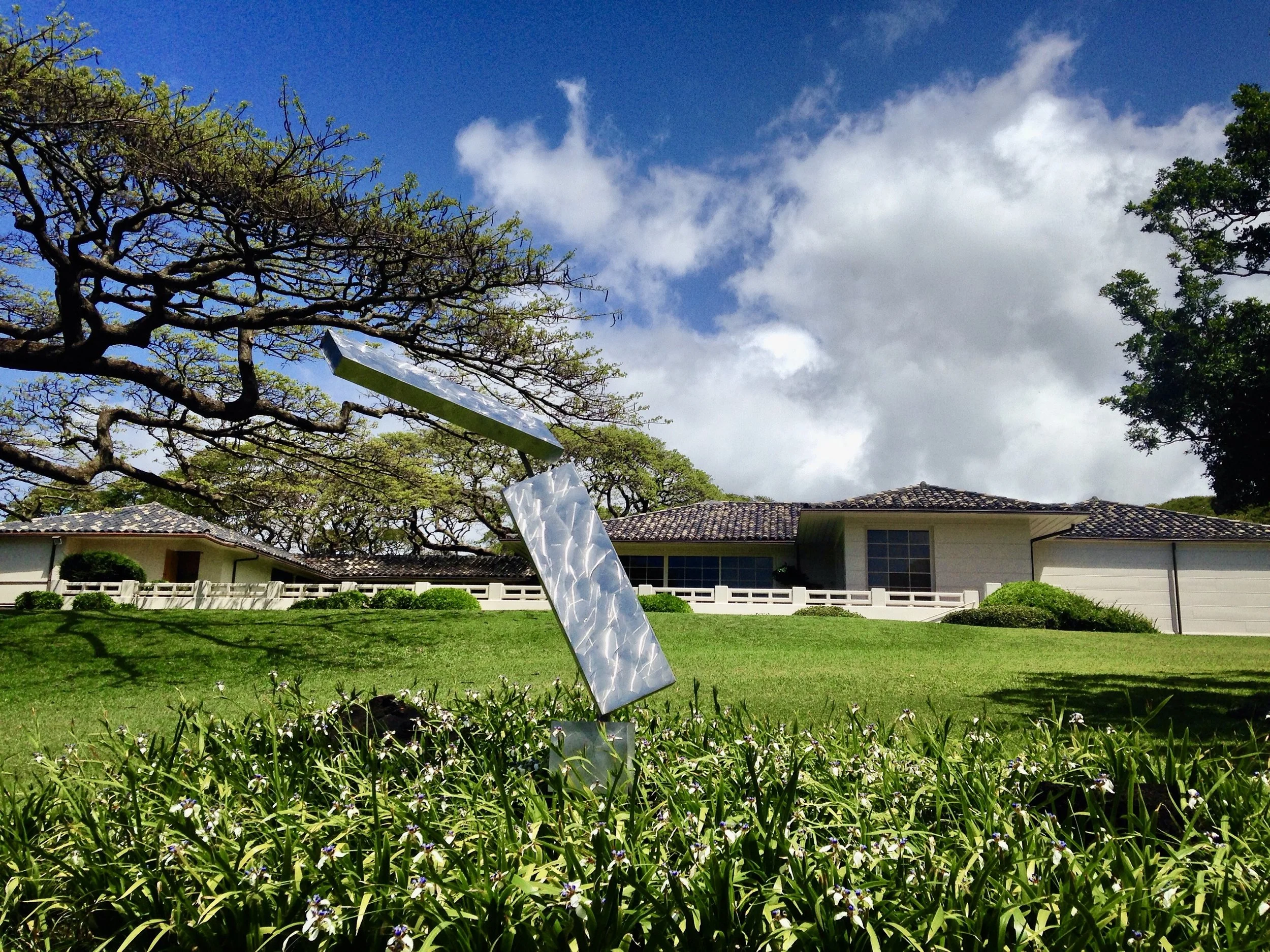
Spalding House in Makiki Heights, is the former home of the Academy of Arts (later renamed Honolulu Museum of Art) founder Anna Rice Cooke. The museum featured galleries and a sculpture-filled garden that overlooked Honolulu. It was a favorite place for me to visit whenever I was back in Honolulu and featured 2 George Rickey sculptures.
Broken Column, shown above, was one that visitors could view from all sides as it’s location on the lawn allowed you to circle it as it moved in the breeze.
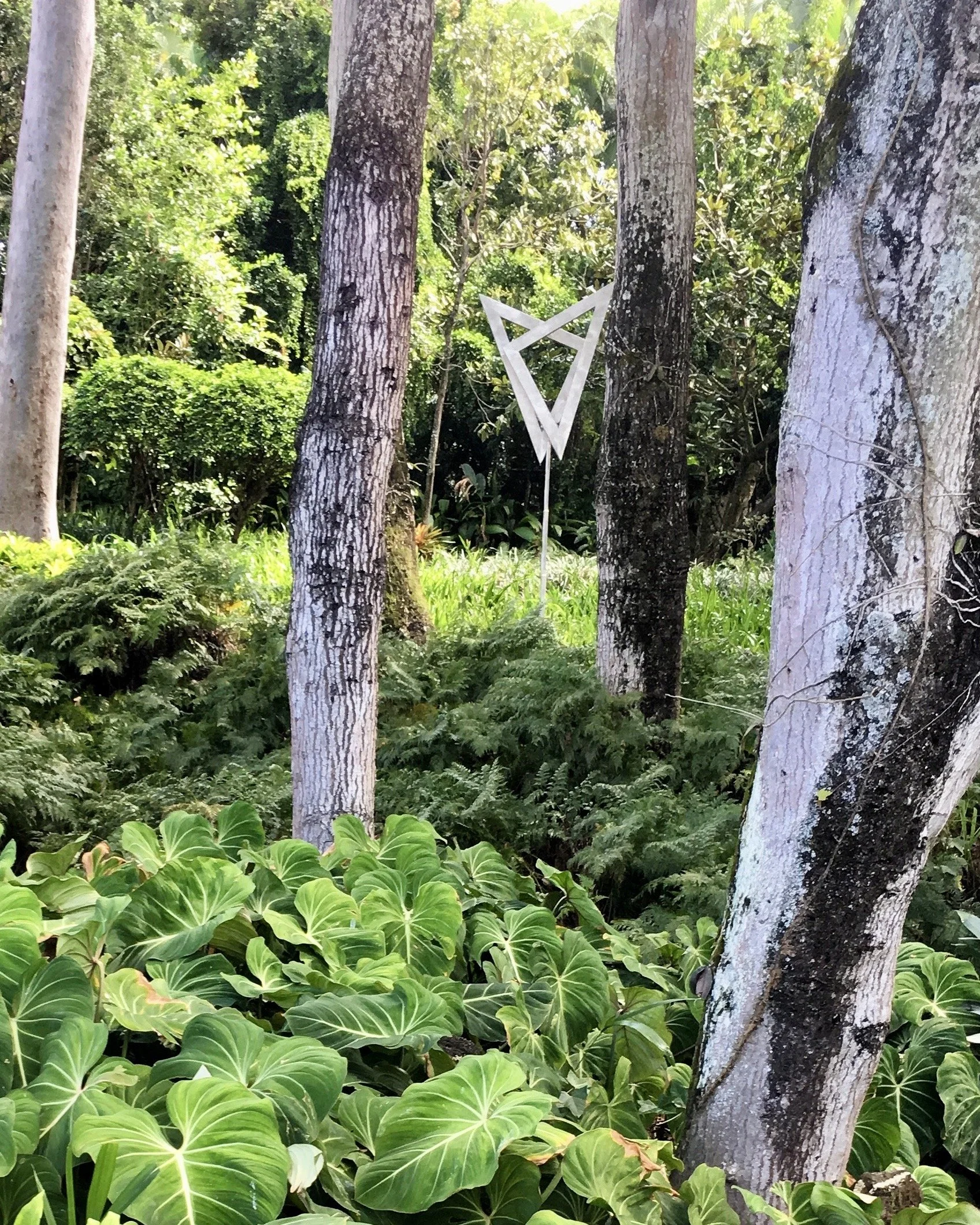
In works such as Two Open Triangles Up Gyratory (image below), Rickey's two wind driven elements (engineered to withstand winds of 80 miles per hour (130 km/h)) provide an endless series of combined, almost dance like, shapes and movements.
In 2019, Spalding House closed to the public and the historic building went on the market.
The Makiki Heights home was designed by Hart Wood and later enlarged by the firm of Bertram Goodhue and Associates. In 1950, Cooke's daughter, Alice Spalding (Mrs. Phillip Spalding), engaged Vladimir Ossipoff to remodel the ground floor.