

Architect Corner - Welton Becket
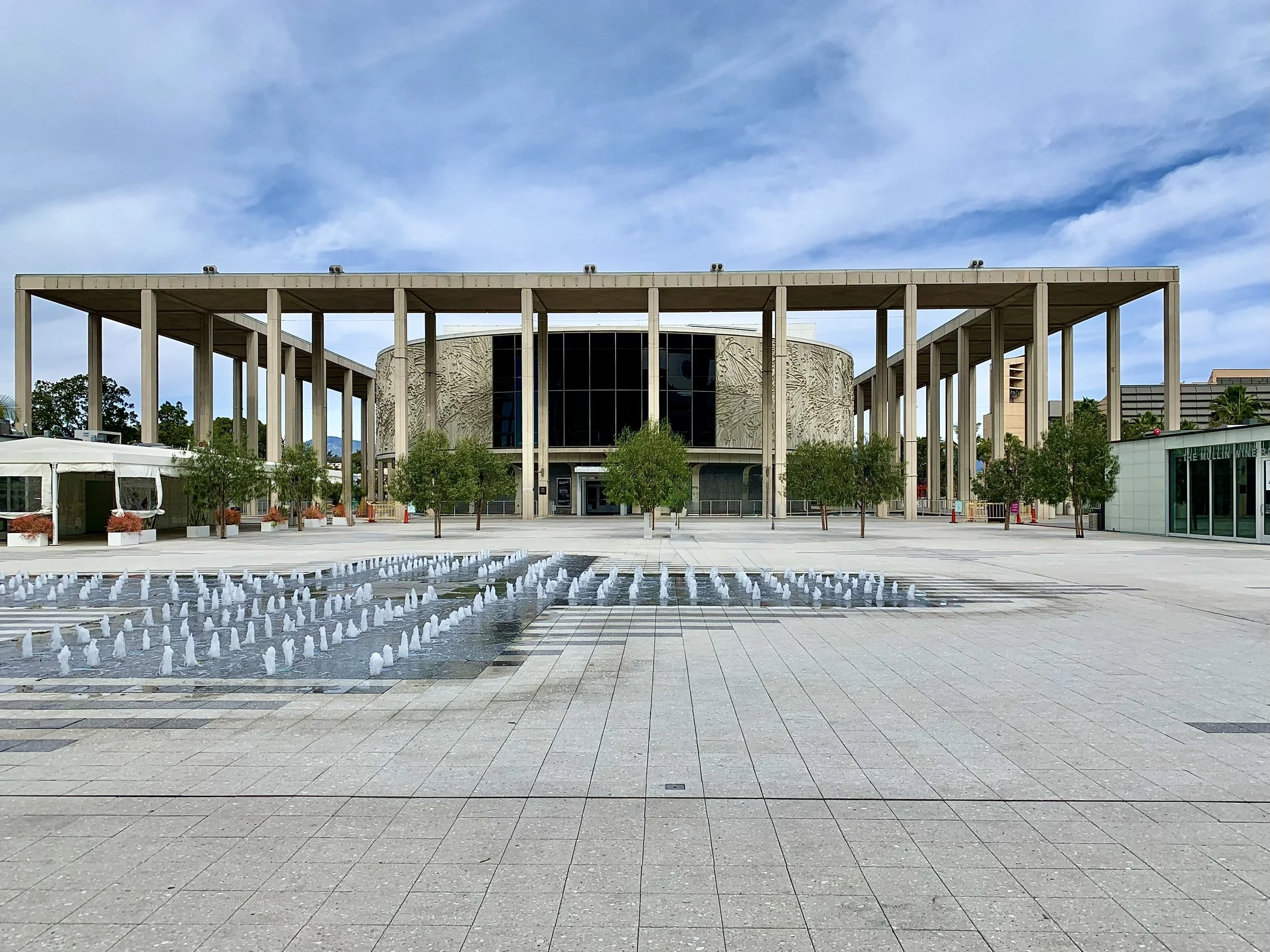
Welton Becket, FAIA and his associates designed some of Los Angeles’ most iconic buildings.
The following is a condensed biography from the Los Angeles Conservancy website:
Welton Becket (1902-1969)
Born in Seattle in 1902, Becket studied architecture at the University of Washington. He and schoolmate Walter Wurdeman moved to Los Angeles in 1933. With Charles Plummer, they formed the partnership Plummer, Wurdeman and Becket, designing restaurants and shops, including the 1935 Clifton’s Brookdale Cafeteria downtown. Their profile rose when their 1935 Pan Pacific Auditorium in Mid-City opened to rave reviews for its Streamline Moderne design.
After Plummer’s death in 1939, the duo continued as Wurdeman and Becket. They worked largely on defense and housing projects until the end of World War II. When large-scale projects were green-lit across the country, Becket and Plummer were well positioned to receive a sizable share of the new commissions. Their first major postwar building was the 1947 Bullocks Pasadena (now Macy’s), one of the first department stores to open after the war. The same year, their General Petroleum building became the first major postwar office building to rise in downtown Los Angeles.
After Wurdeman died unexpectedly in 1949, Becket renamed the firm Welton Becket and Associates. The iconic buildings continued: Capitol Records (Hollywood, 1956), Parker Center (Civic Center, 1955), Los Angeles International Airport (with William Pereira, Charles Luckman, and Paul R. Williams; Inglewood, 1959), and The Music Center (Civic Center, 1964-67).
Below, a sampling of the firm’s projects that I’ve had the pleasure of visiting in SoCal.
Macy’s Pasadena (former Bullock’s Pasadena), 1947
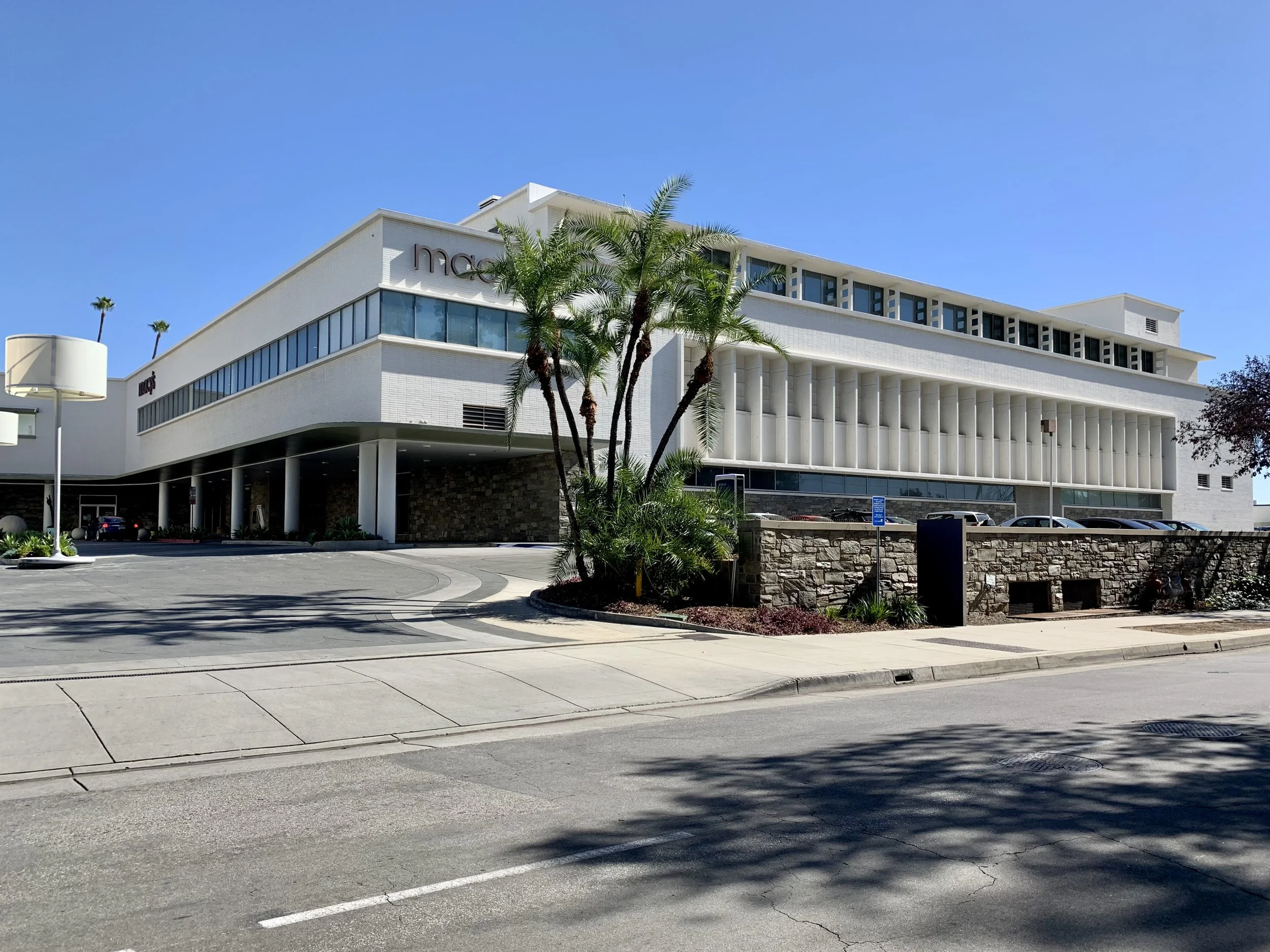
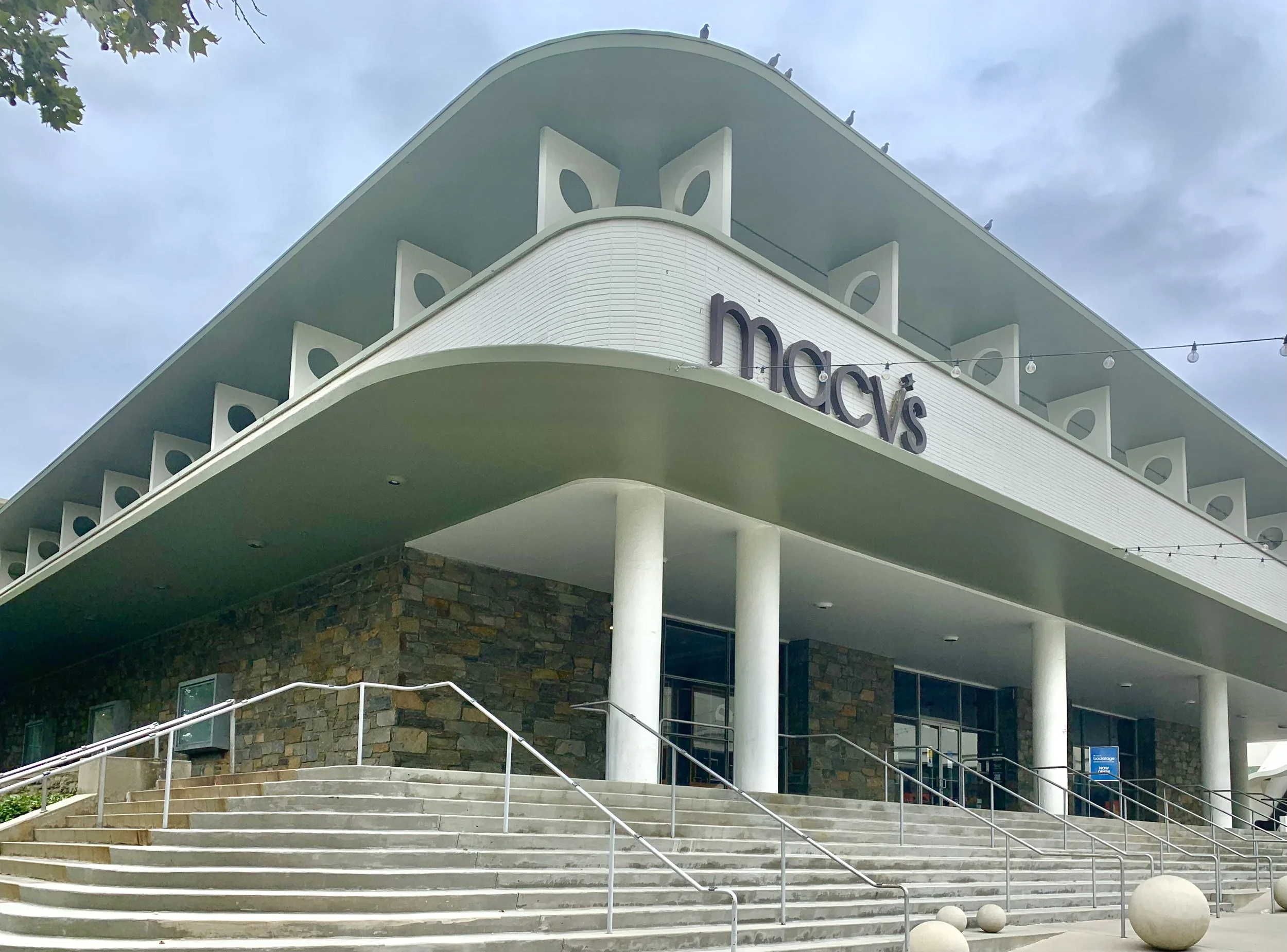
This one’s in my neighborhood! I often shop here and love the both the interior and exterior design details.
The historic Macy’s Pasadena originally opened in 1947 as Bullock’s Pasadena.
From the Los Angeles Conservancy website:
Wurdeman and Becket's first of over 100 department store designs, Bullock's Pasadena was built in the Late Moderne style in 1947. Its design expands the aerodynamic lines of Streamline Moderne into a more subtle, elegant form, meeting the demand of Bullock's president that the department store feel like a fine residence. The architects had full control of the interior design as well as the exterior, collaborating with interior designer Raymond C. Dexter to create sixty-one discrete departments, each with its own distinct finishes and architectural style.
To attract the garden-loving populace of Pasadena and the San Gabriel Valley, landscape architect Ruth Shellhorn worked with Wurdeman and Becket to create a lush landscape from which the massive building arose like an island.
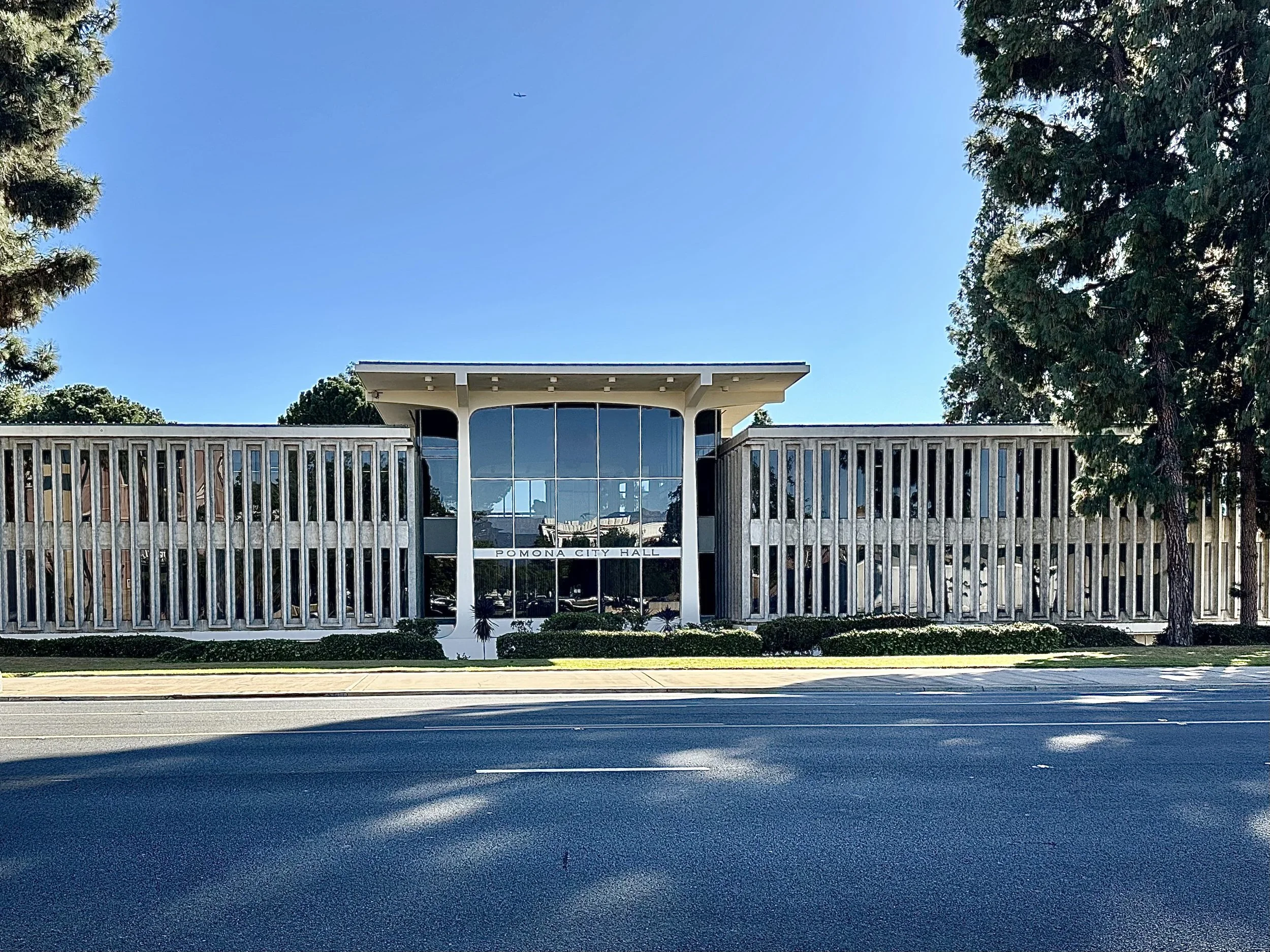
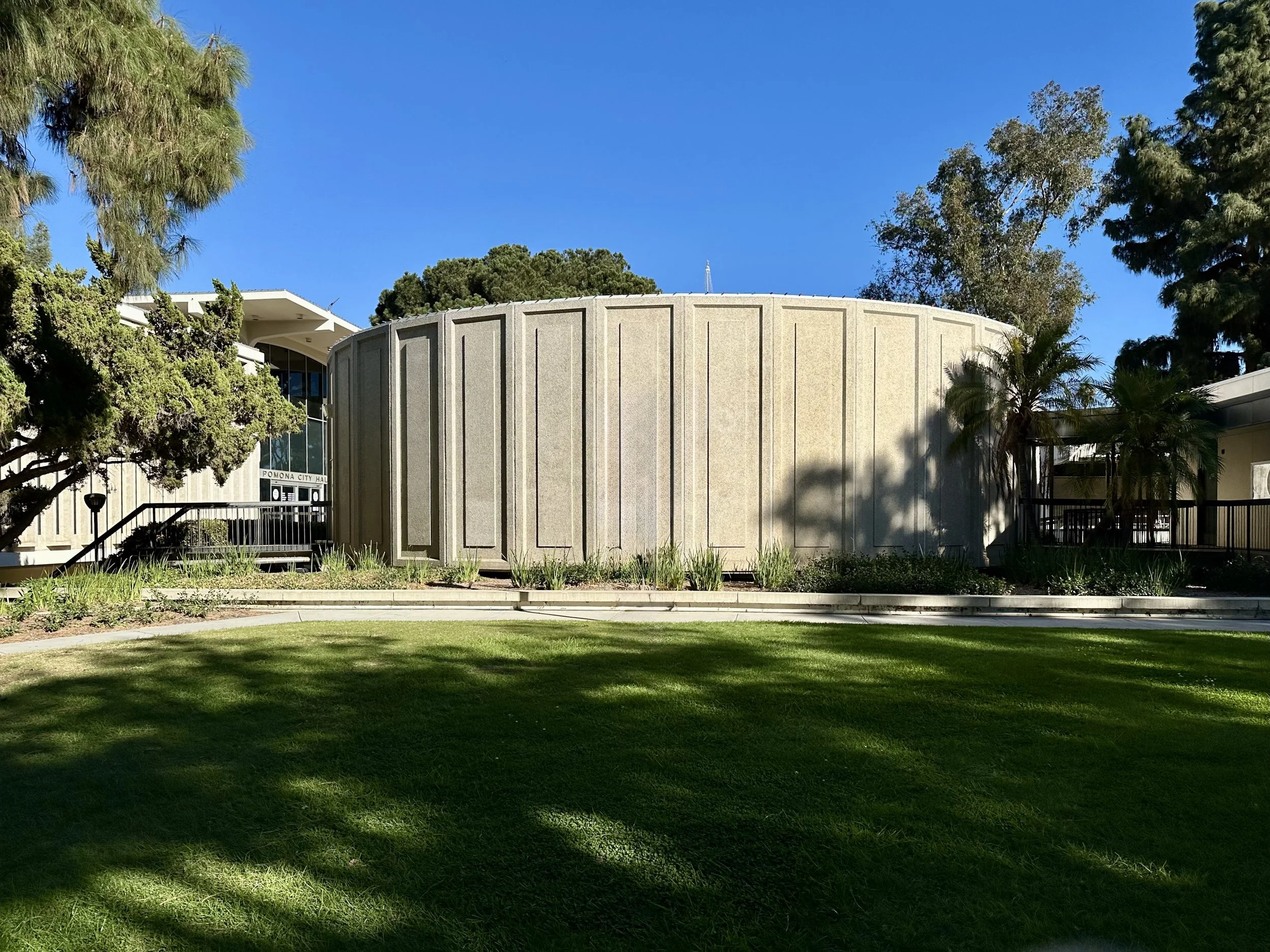
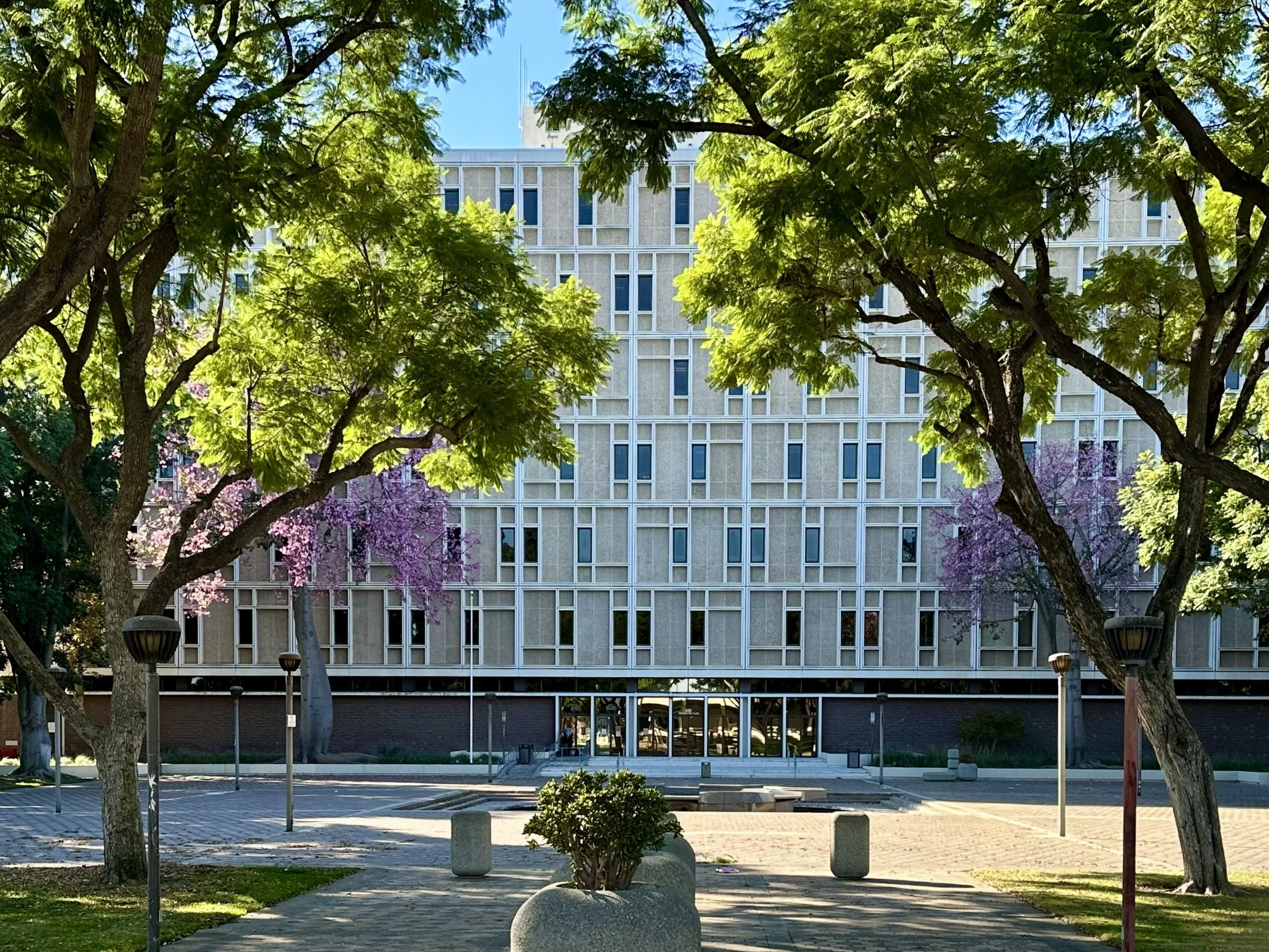
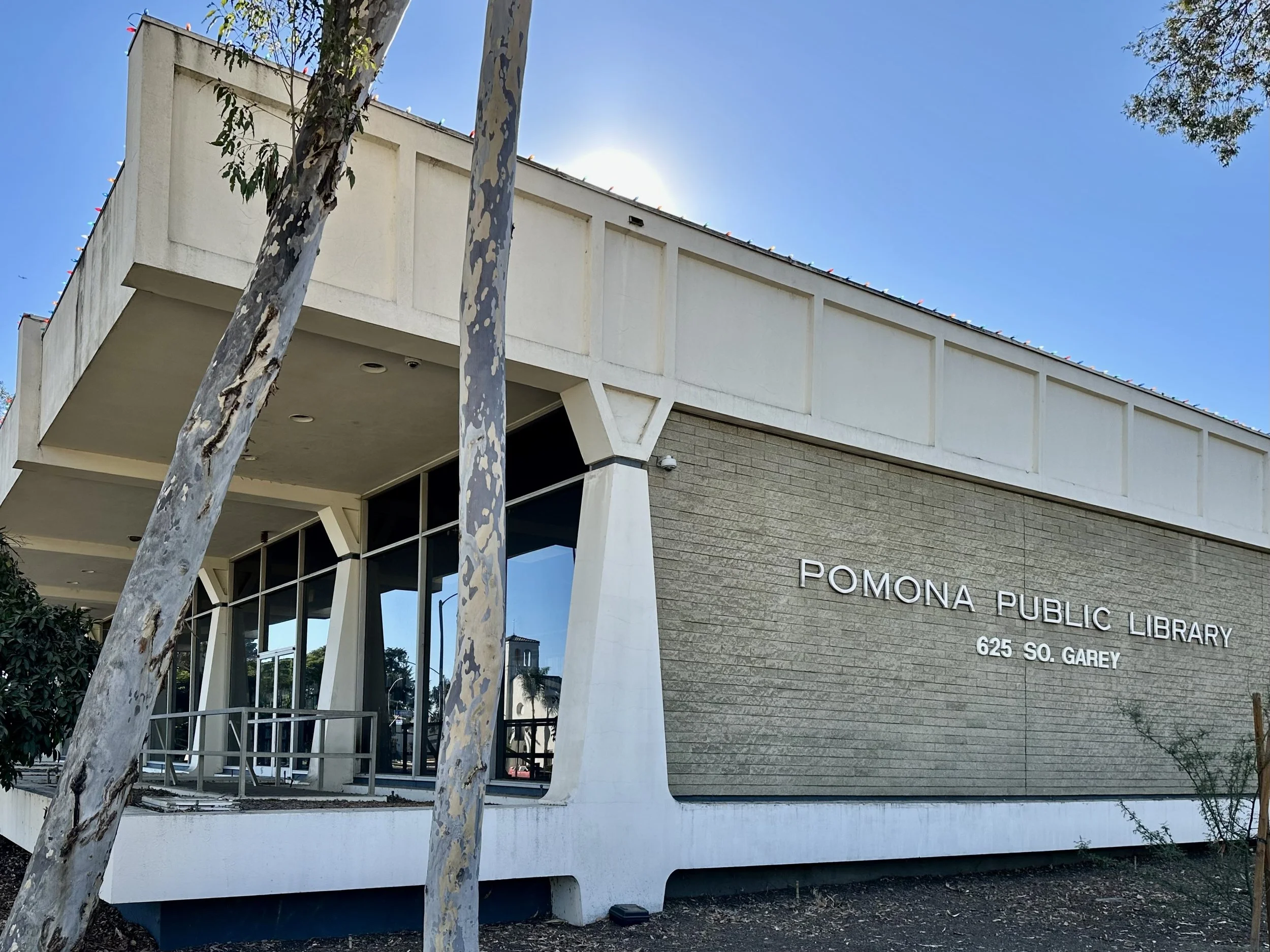
Pomona Civic Center, 1969 505 S. Garey Ave. Pomona, CA
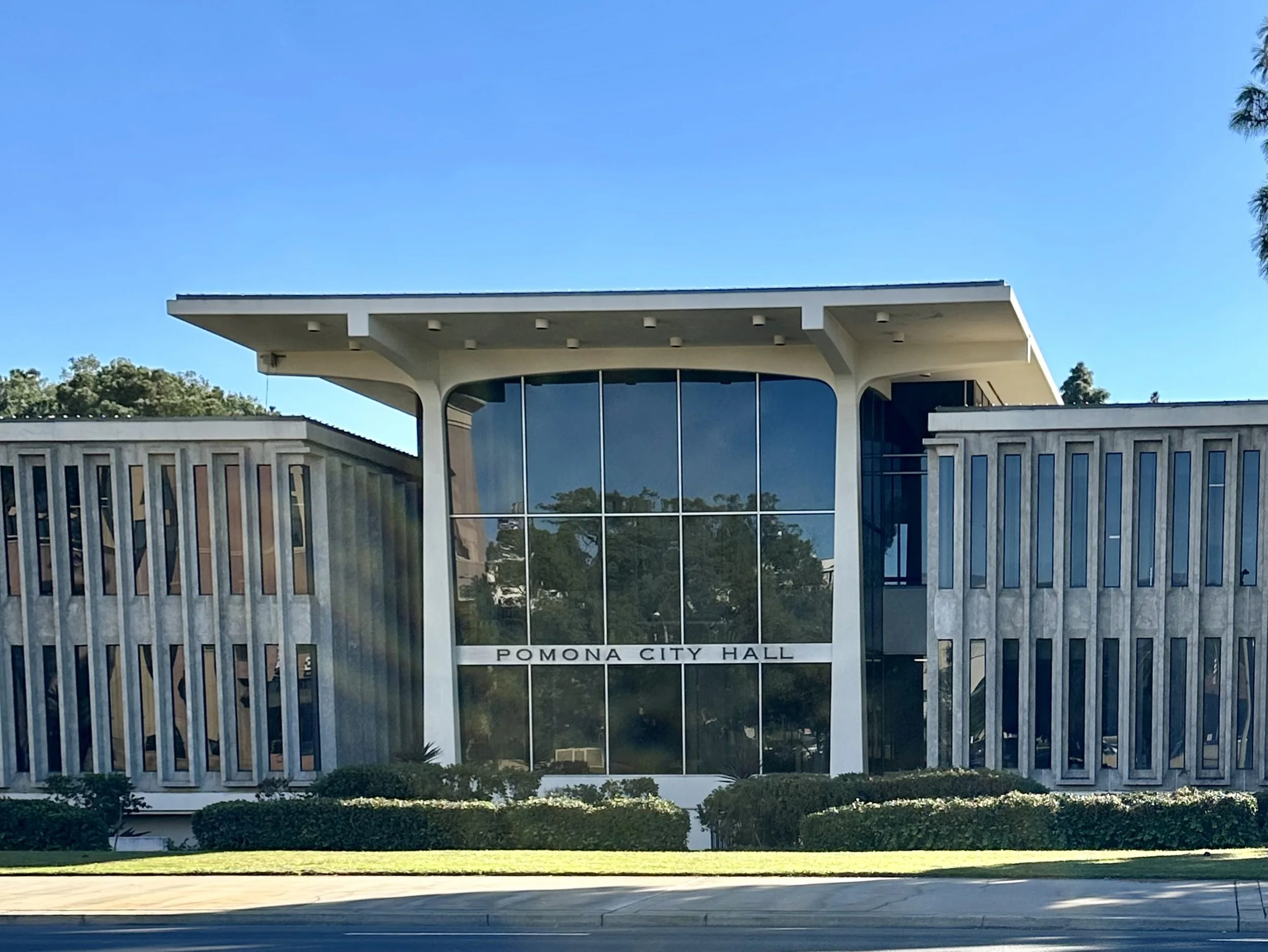
Condensed from the Los Angeles Conservancy website:
In the late 1960s, Pomona decided to revitalize its city center with a new Civic Center and a downtown pedestrian mall. It planned a complex of twelve buildings, but only six were actually built, meaning we will never get to see the auditorium, monorail station, heliport, or residential high-rises that might have been.
The six constructed buildings, completed by 1969, are notable in that they represent the largest concentration of Welton Becket and Associates-designed architecture in the nation.
Pomona’s New Formalist Civic Center includes the City Hall, Council Chambers, Public Library, Police Department, Superior Court, and Public Health buildings.
City Hall is monumental, with two rectangular volumes joined by a central glass pavilion with a dramatic overhanging roof. The Council Chambers building is small and circular, like a miniature version of the Forum in Los Angeles.
Keith Spalding Building of Business Services, Caltech (1969)
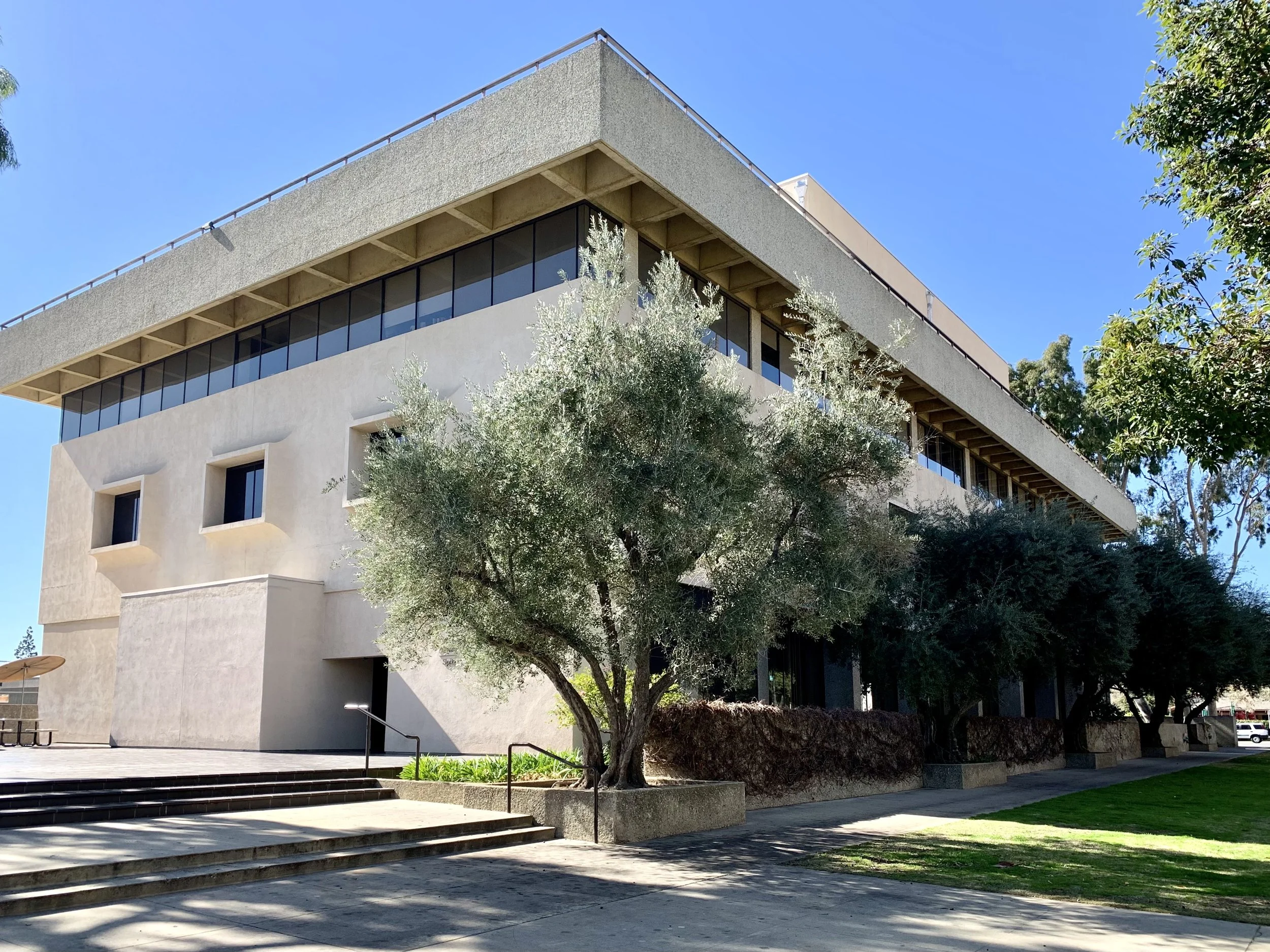
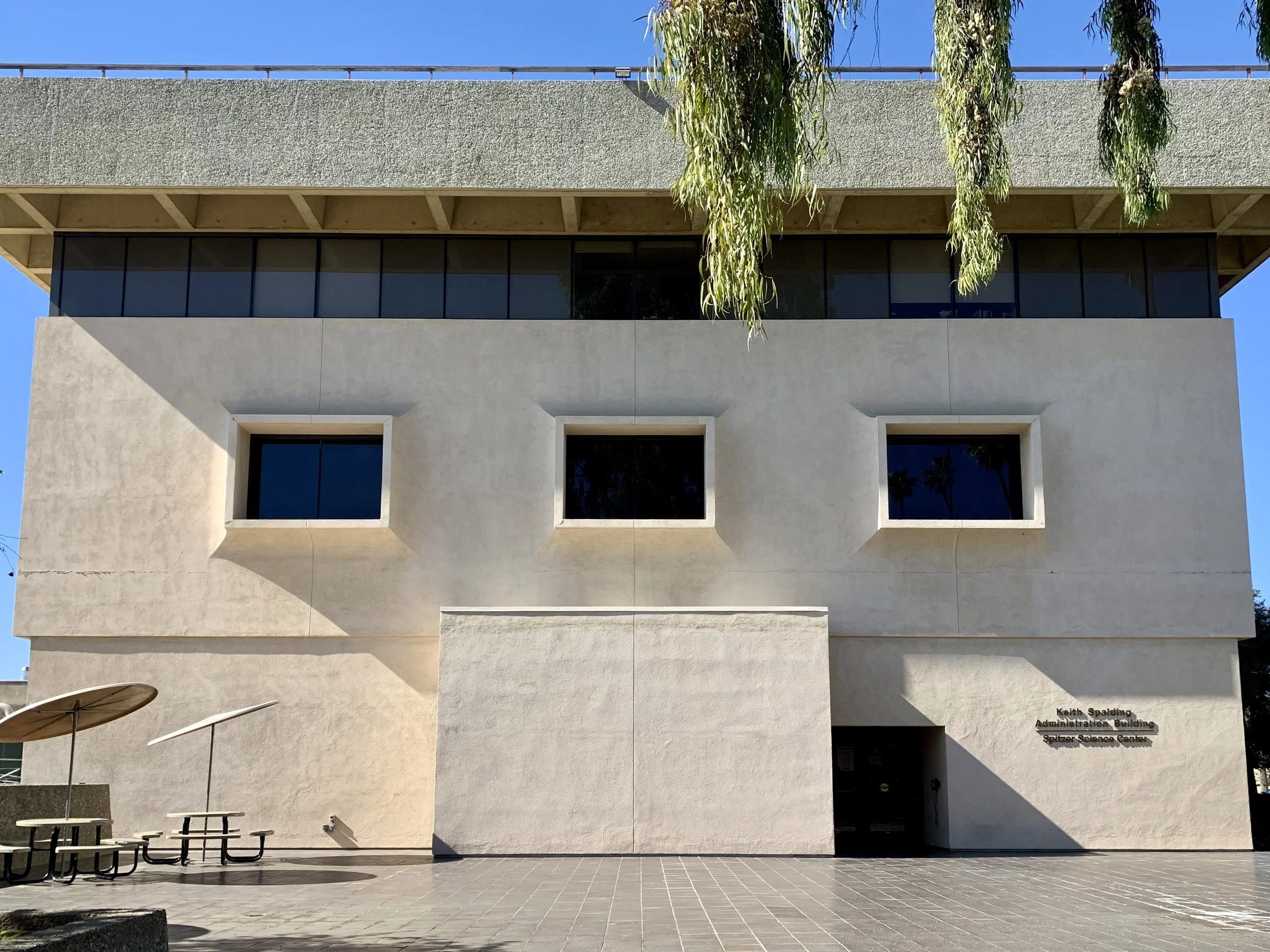
Another building within walking distance from home, this one’s on the corner of Wilson and California.
Fun fact about this campus building - Did you know there’s a USPS location here? IYKYK
Capitol Records Tower, 1956 1750 Vine Street, Los Angeles
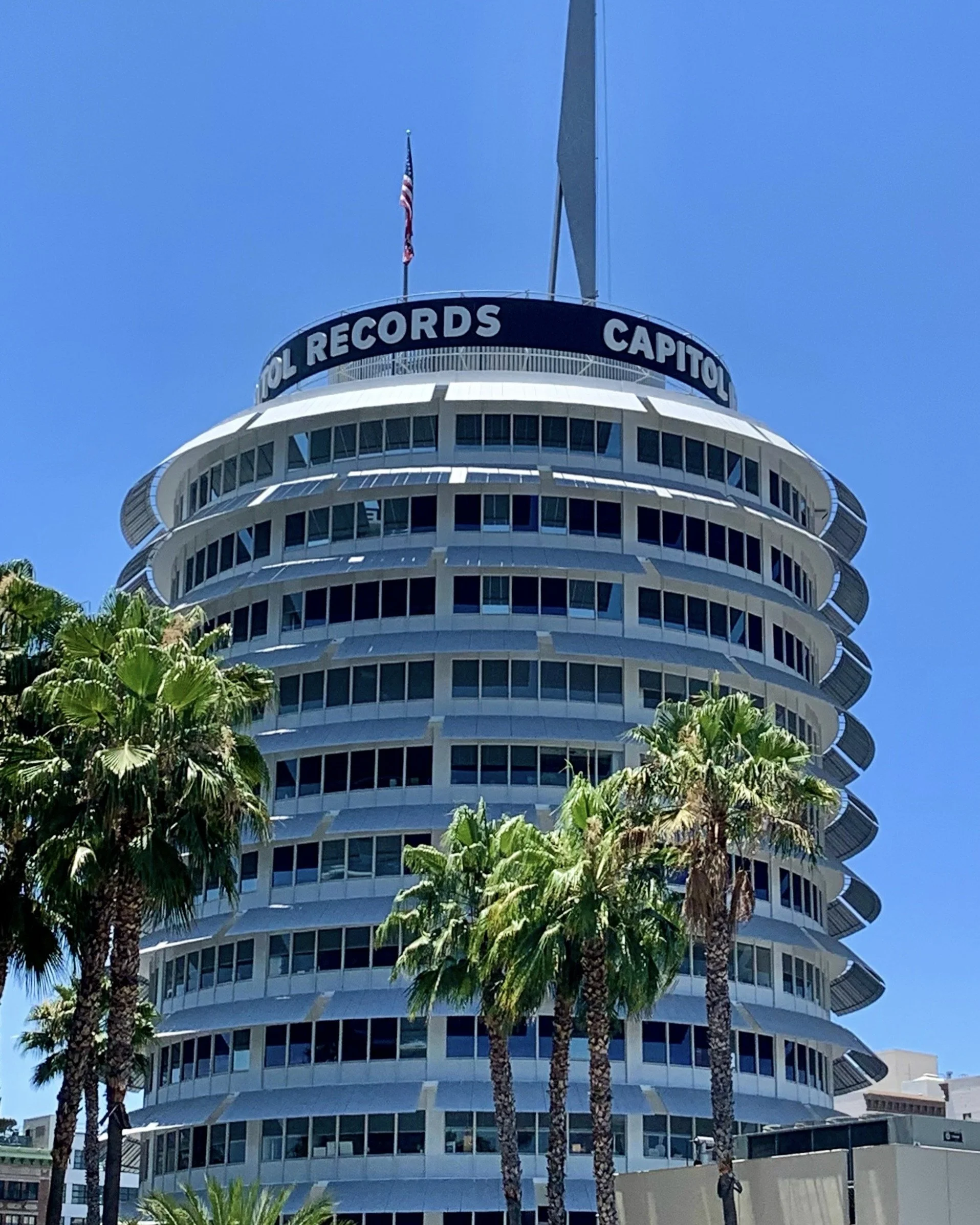
From the Los Angeles Conservancy website:
The thirteen-story tower is notable for its circular plan and ninety-foot aluminum spire with a beacon that blinks out H-O-L-L-Y-W-O-O-D in Morse code.
The most striking innovation lay in the three recording studios underneath the tower, the first ever designed for high-fidelity recording. The underground reverberation chambers, located below the parking lot east of the structure, were designed with help from guitar pioneer Les Paul and have remained in high demand ever since. The recording studios at Capitol Records have hosted legendary recording sessions by such artists as Frank Sinatra, Nat “King” Cole, The Beatles, and The Beach Boys.
Glendale Central Library, 1973
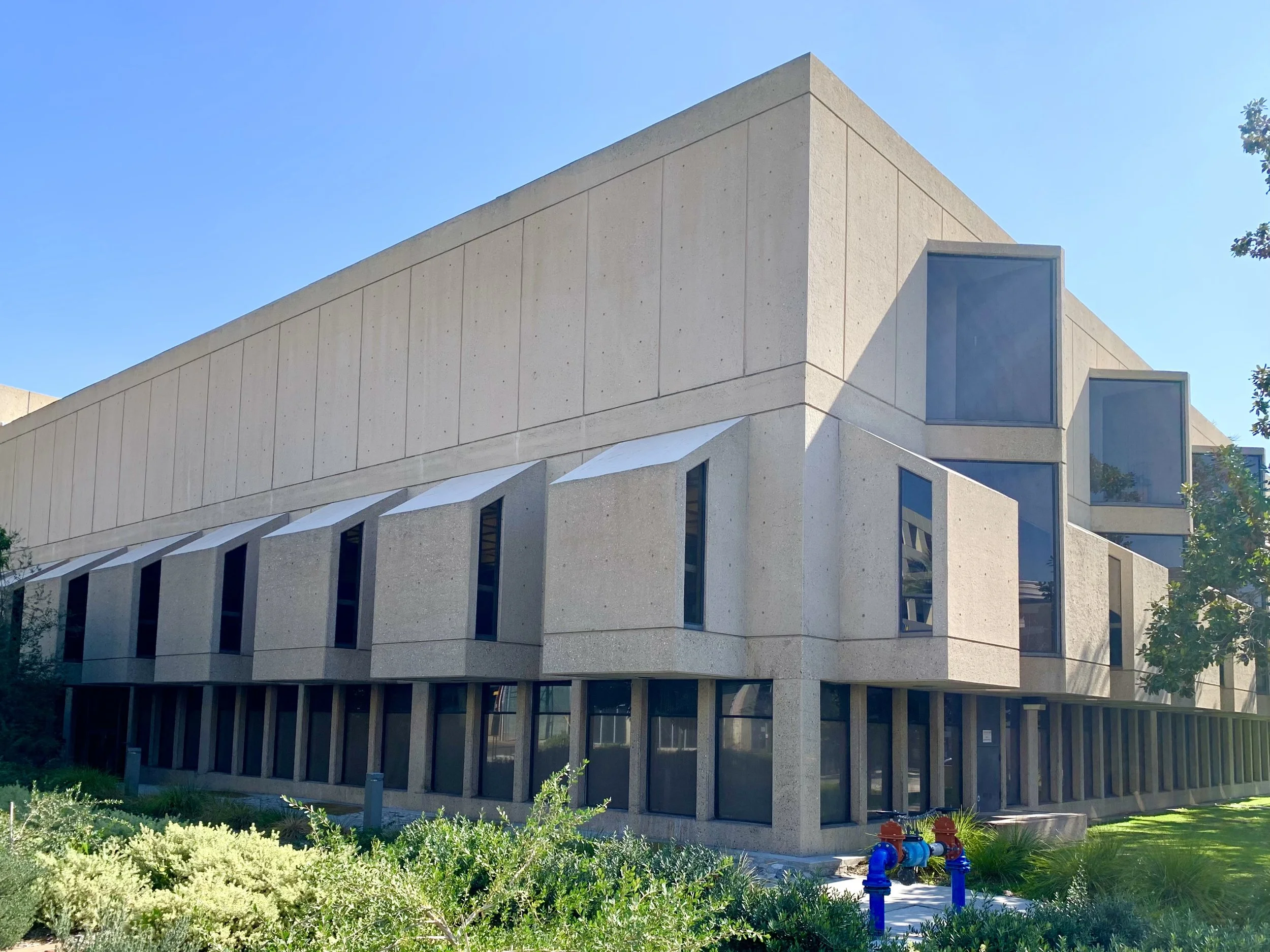
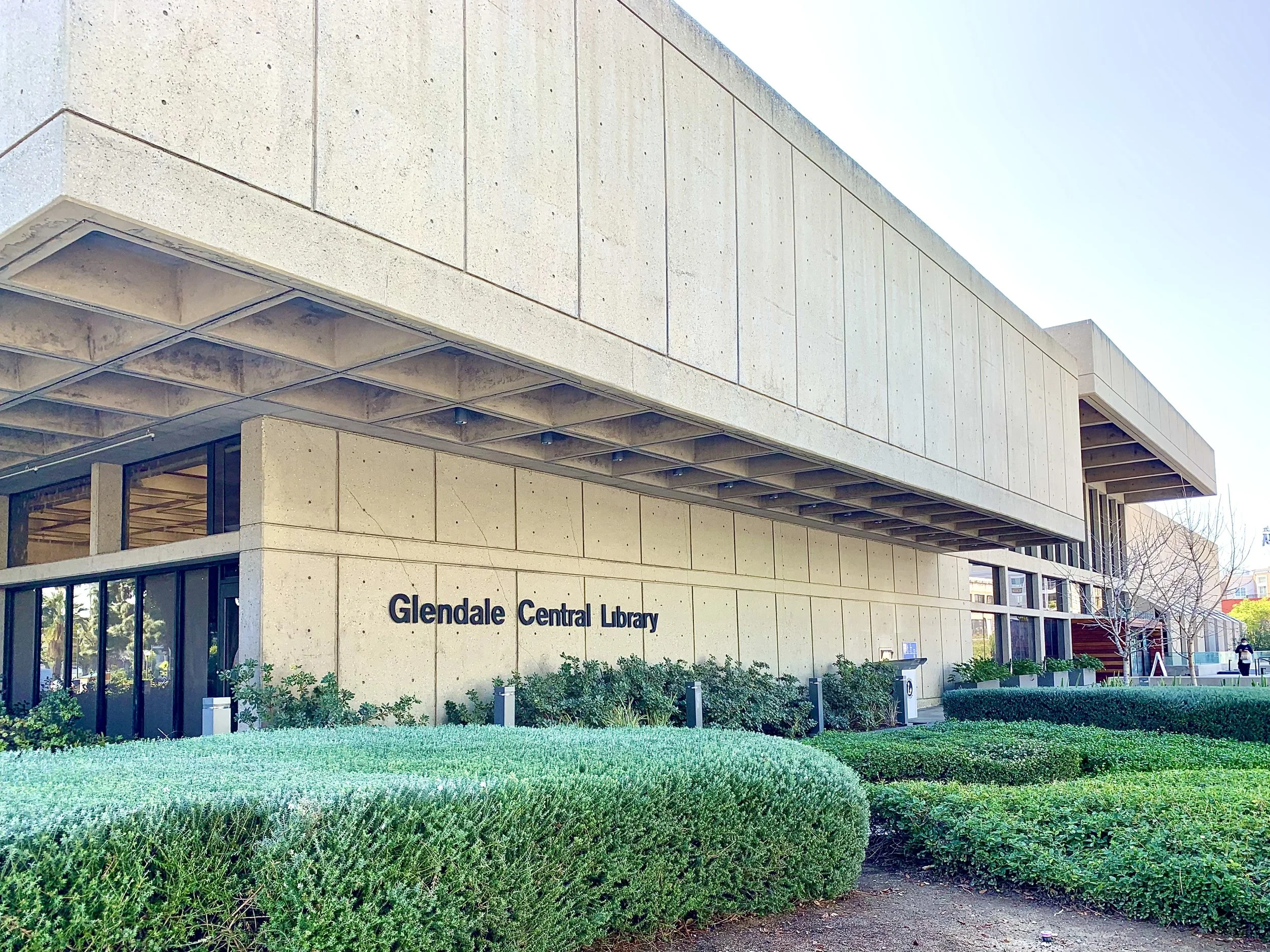
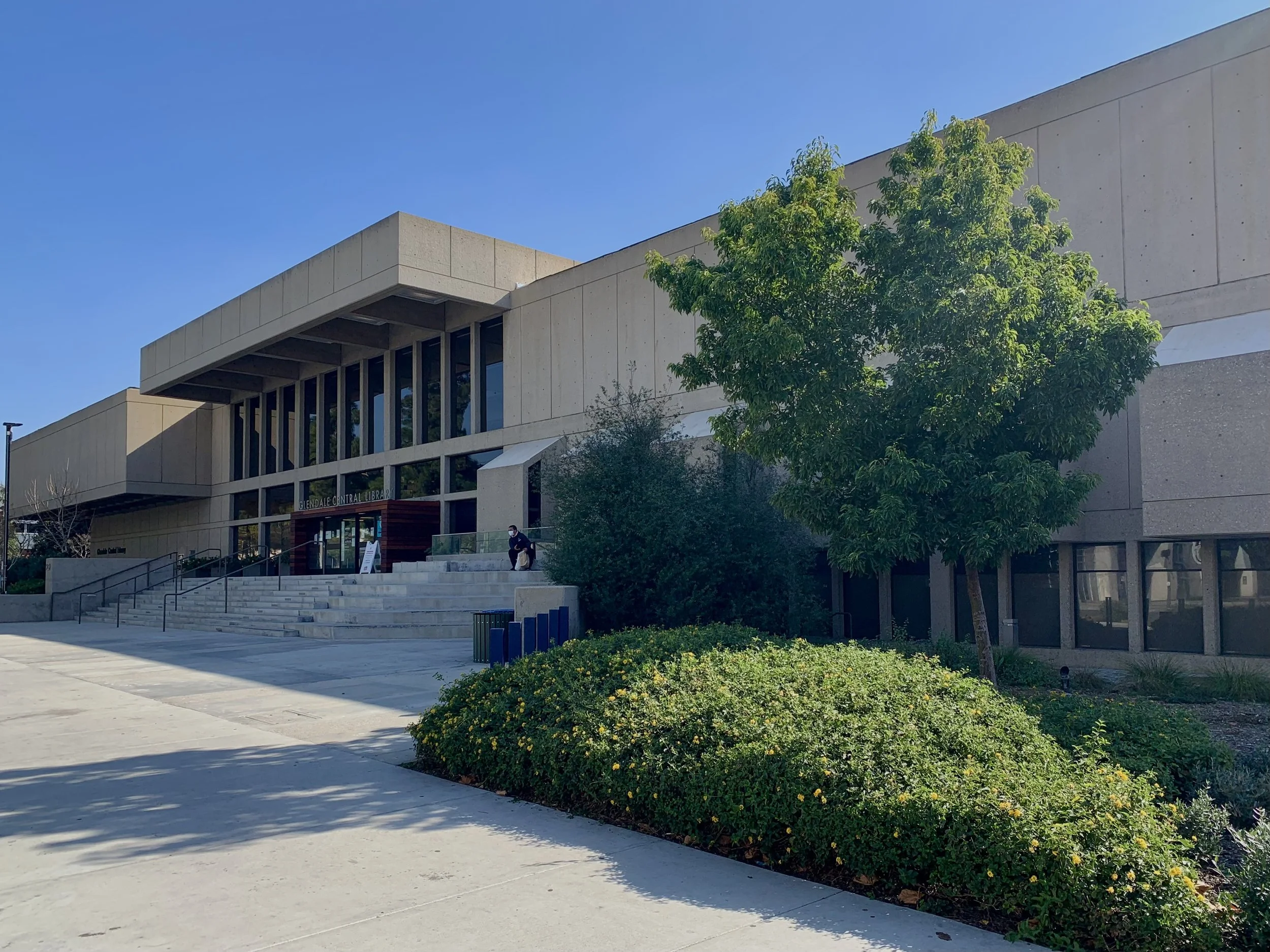
Architect Marvin Taff of Welton Becket and Associates designed this Brutalist-style building composed of cast-in-place concrete.
The Music Center, DTLA (1960s)
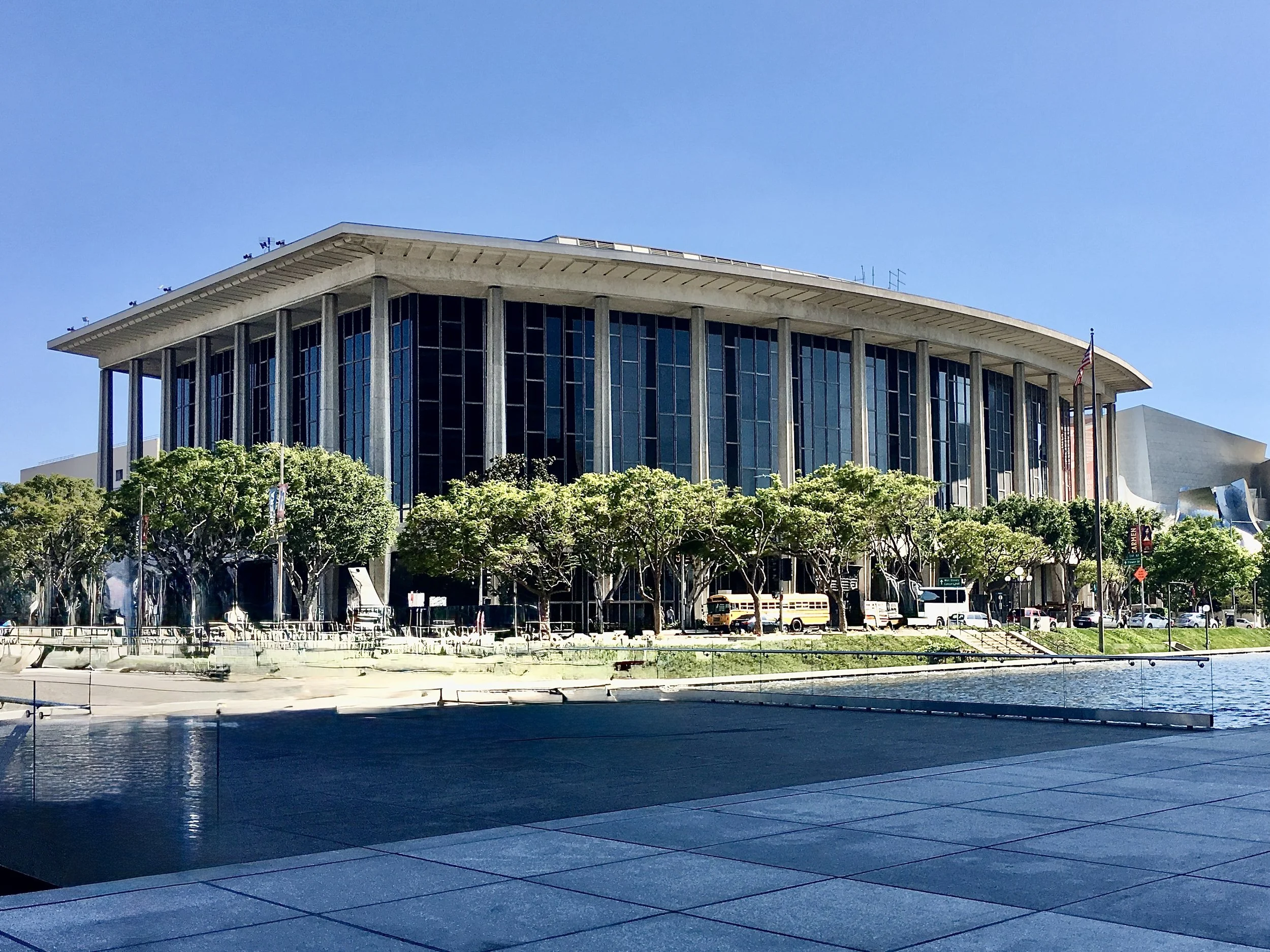
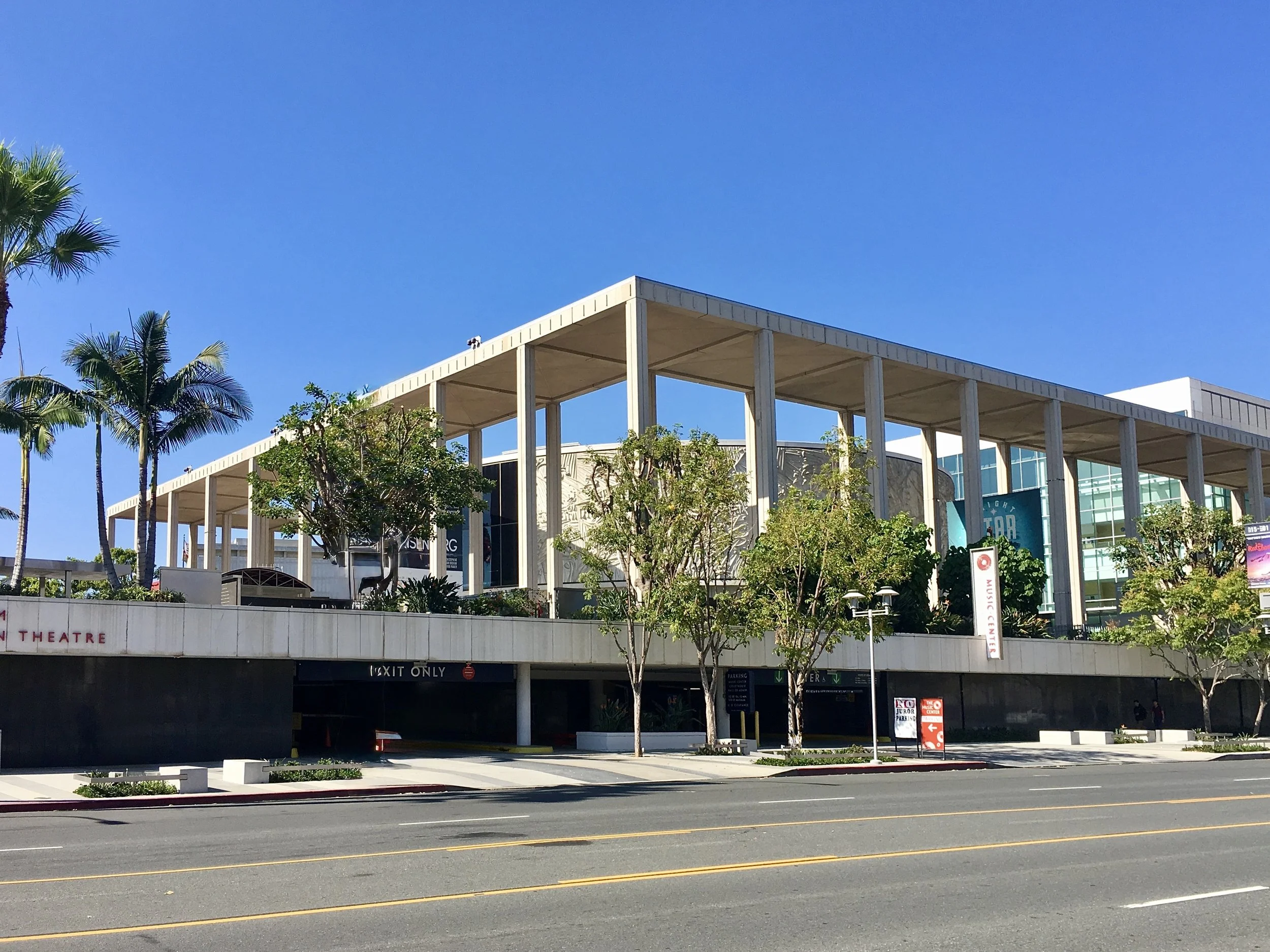
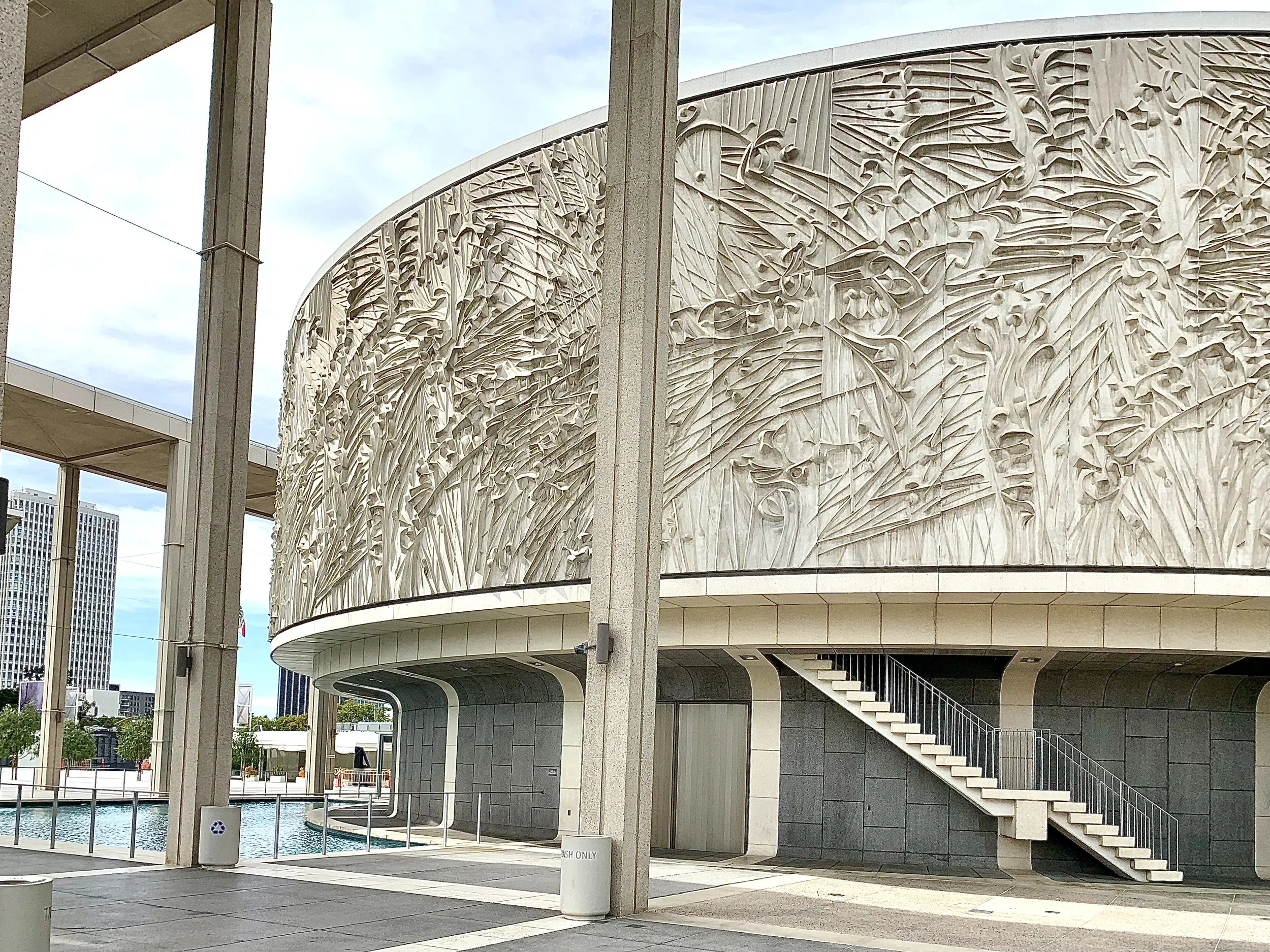
This cultural space is a beauty on Grand Avenue.
From SAH Archipedia:
The creation of the Music Center in the 1960s marked an important juncture in the history of Los Angeles. Located adjacent to the city’s first major redevelopment site on Bunker Hill, the complex was used to spur private investment in the larger project and its completion solidified Los Angeles’s image as a city of cultural importance.
The Music Center originally comprised three buildings—the Dorothy Chandler Pavilion, the Mark Taper Forum, and the Ahmanson Theater—designed by Welton Becket and Associates in the New Formalist style, employing monumental columns, colonnades, and traditional materials.