

Shapely Architecture - Domes
Domed roofs, geodesic domes and more. All here in this post.
The Geodesic Dome House (or the “pineapple house”, “beehive house”, “sphere house”, or many other names) 998 Camino Lindo, Isla Vista, CA
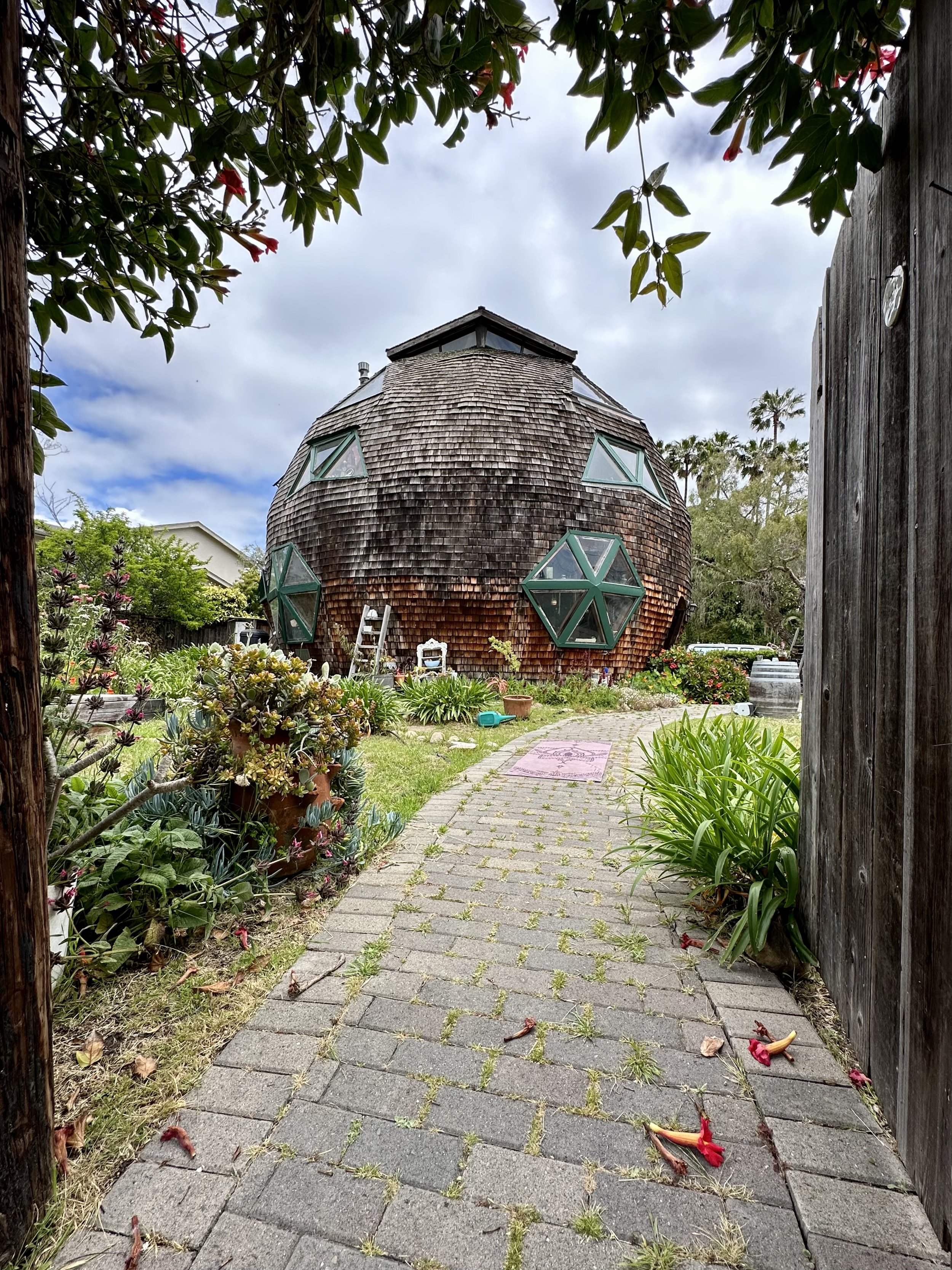
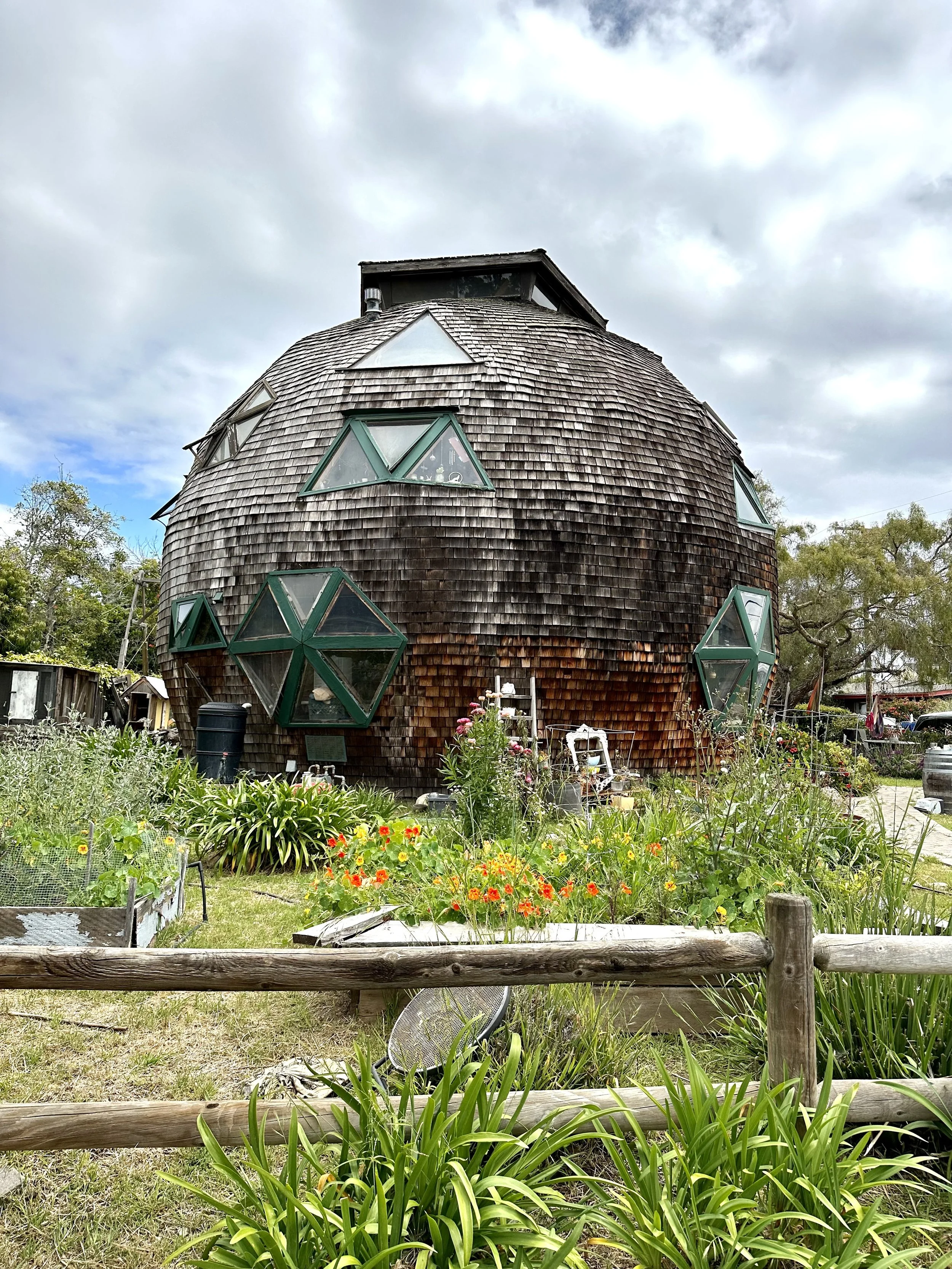
Built: 1972-73
During the academic year 1972-73 Michael F. Hoover, a UCSB graduate student at time of construction, took time off from his studies to design and construct a geodesic dome house in Isla Vista. The “dome” as it was called, became a social focal point for students during the 1970’s, and is featured in the book “Santa Barbara Architecture”.”
Here in the 1980 edition of Santa Barbara Architecture: “This shingled, three-quarter dome is a highly successful home. It is illuminated by a central light shaft and many triangular windows in different configurations. Five bedrooms are organized around a central staircase.”
Pioneer Center for the Performing Arts (originally known as Pioneer Theater Auditorium), 1967
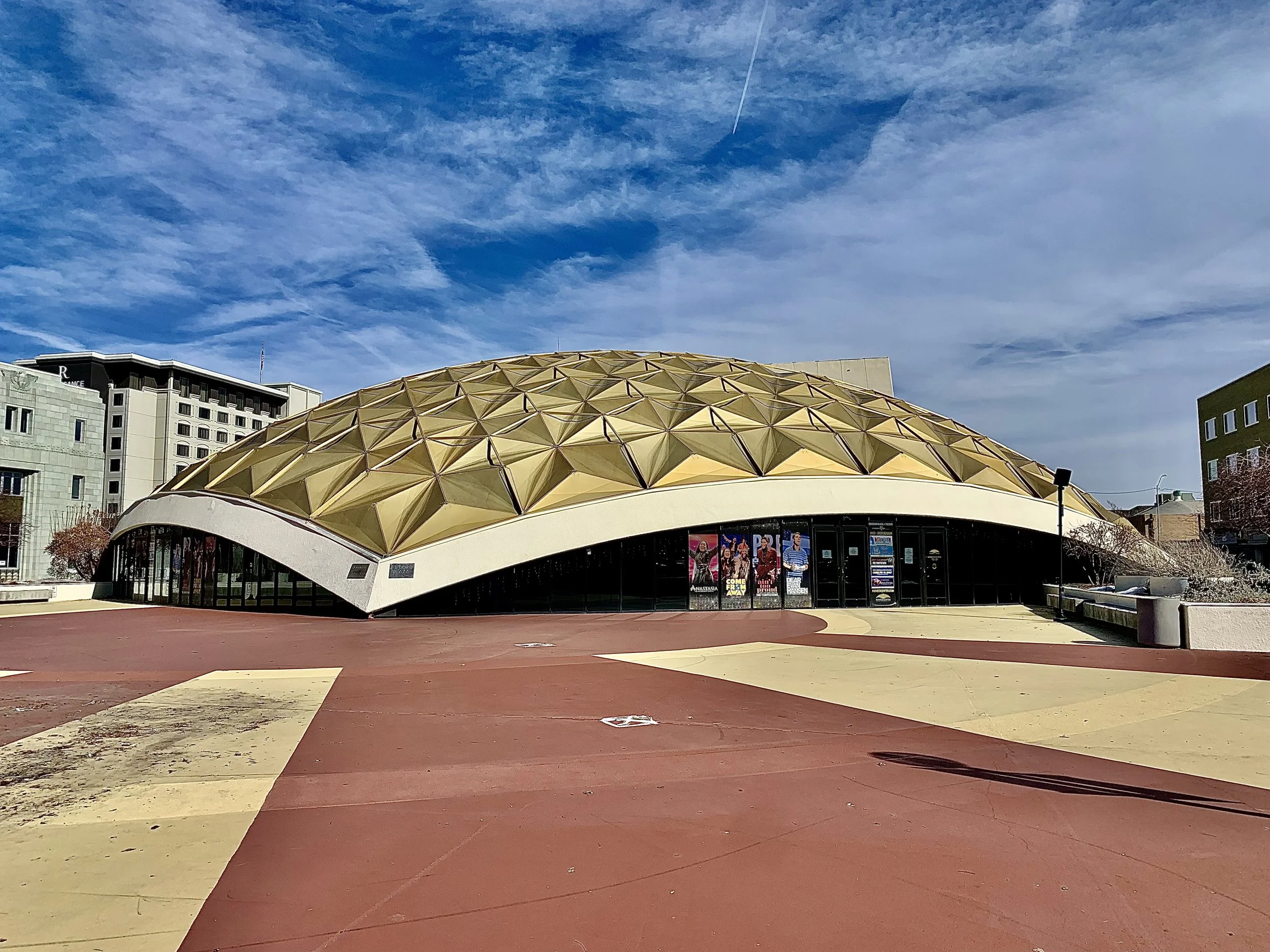
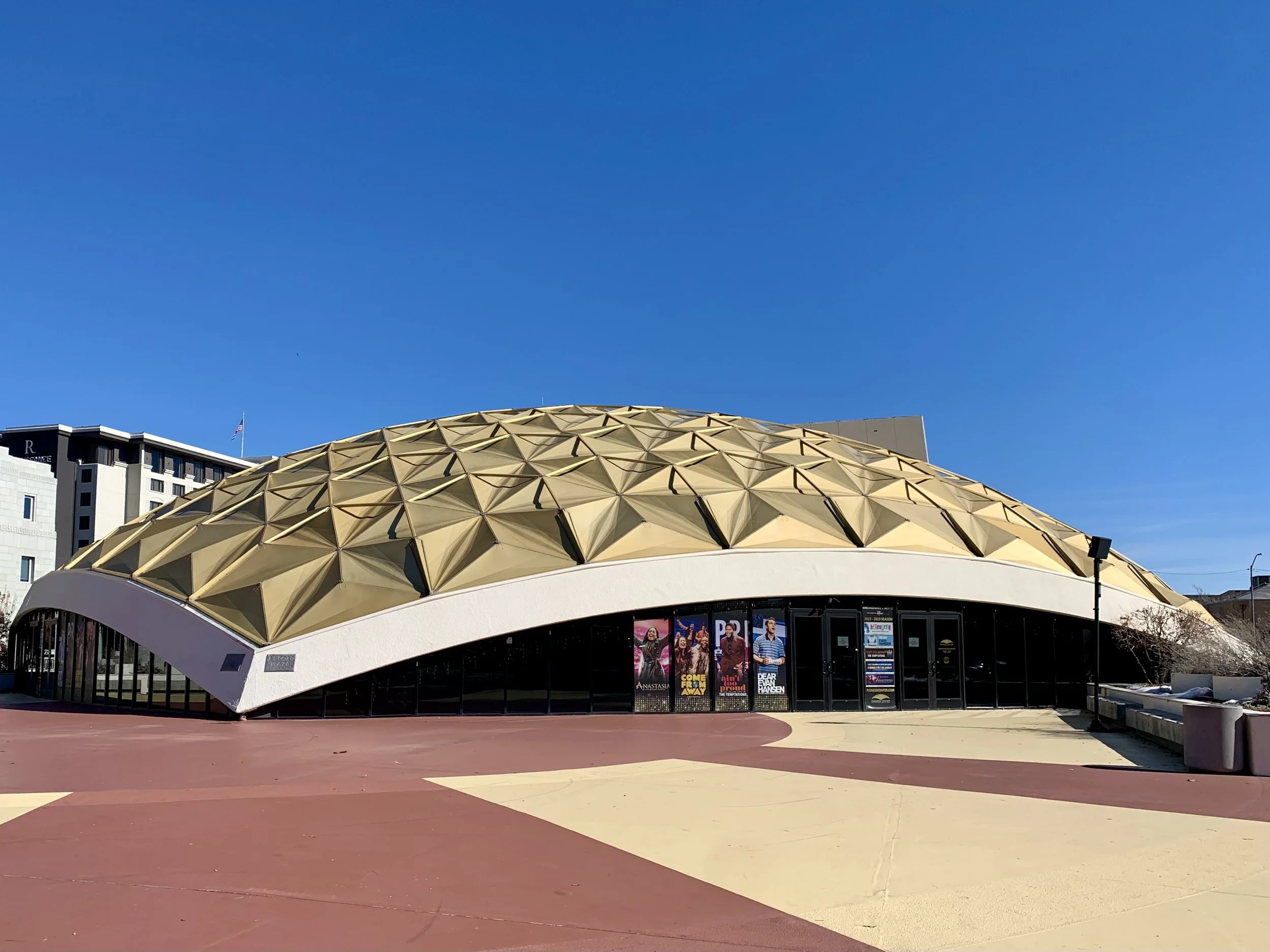
I must have walked by the eye-catching gold-domed theater twice as you can tell from the differences in the sky in the two image above.
From Wikipedia:
The Pioneer Center for the Performing Arts (originally known as Pioneer Theater Auditorium) is a theater located in Reno, Nevada. It was designed by the Oklahoma City architectural firm of Bozalis, Dickinson and Roloff as a concrete structure with a distinctive gold geodesic dome roof. The facility was completed in 1967 with 987 seats on the main level and 513 seats in a balcony, totaling to 1,500.
The co-founder of Temcor, the project's contractor, was Don Richter, a student of Buckminster Fuller, developer of the geodesic dome concept. Temcor had built several gold-anodized aluminum domes before the Pioneer, and was responsible for more than 5000 dome projects.
The National Bowling Stadium, Reno NV Architect: Peter B. Wilday Year: 1995
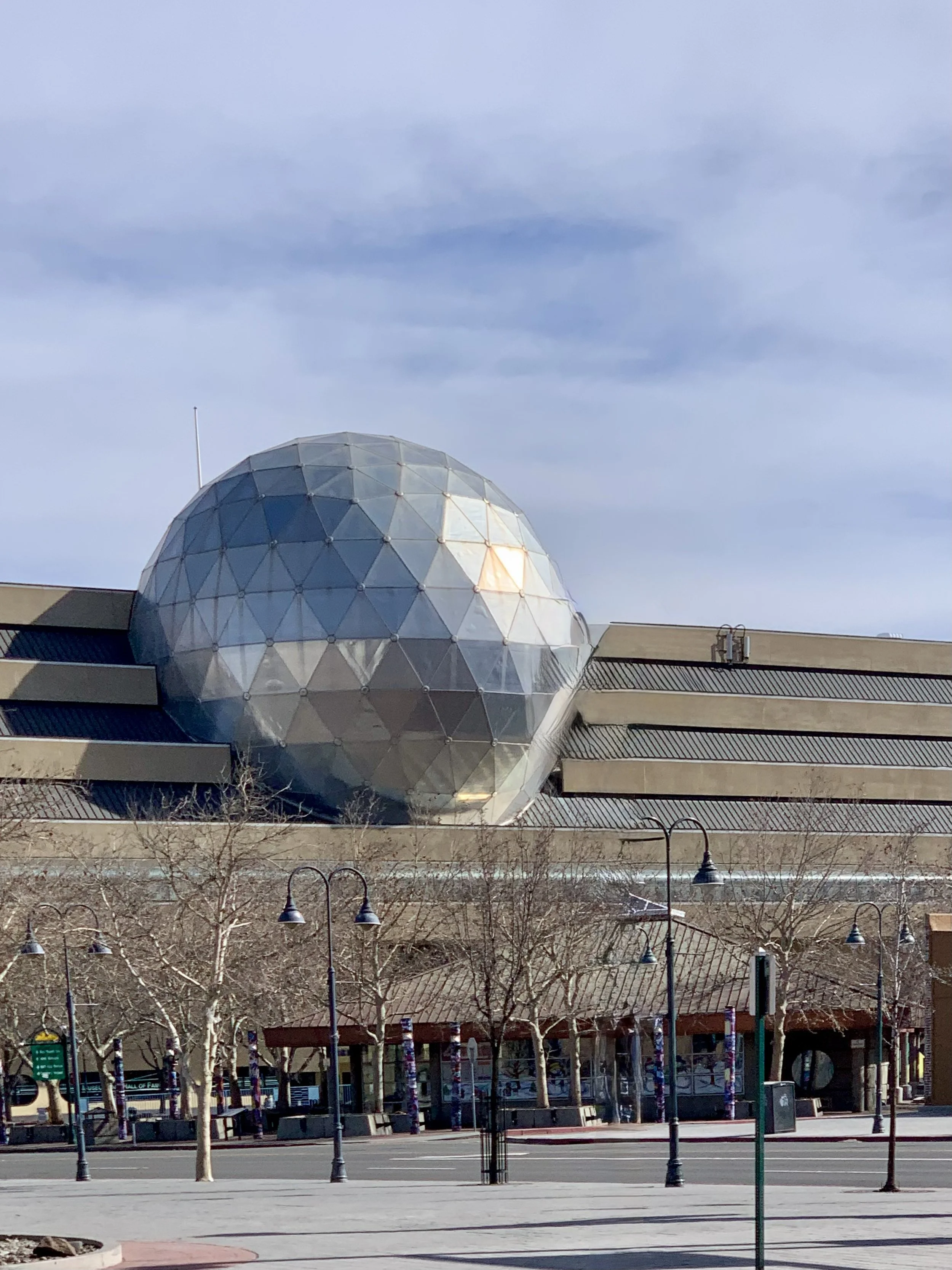
Not a domed building, but a dome on a building!
The National Bowling Stadium is a 363,000-square-foot ten-pin bowling stadium in Reno, Nevada. The stadium is recognizable for an 80 feet aluminum geodesic dome in its facade, built to resemble a large bowling ball.
Nicknamed the "Taj Mahal of tenpins", the 78-lane stadium opened on February 3, 1995, cost $47.5 million, and took three years to build. It is often the filming location for bowling scenes in films.
In addition to being the location of the grand finale between Bill Murray and Woody Harrelson's characters in the 1996 bowling film Kingpin, the stadium was also a setting in the Michael J. Fox/Kirk Douglas film Greedy.
Vida Church (formerly Sepulveda Unitarian Universalist Society), 1964 9550 Haskell Avenue, North Hills Architect: Frank Ethrenthal
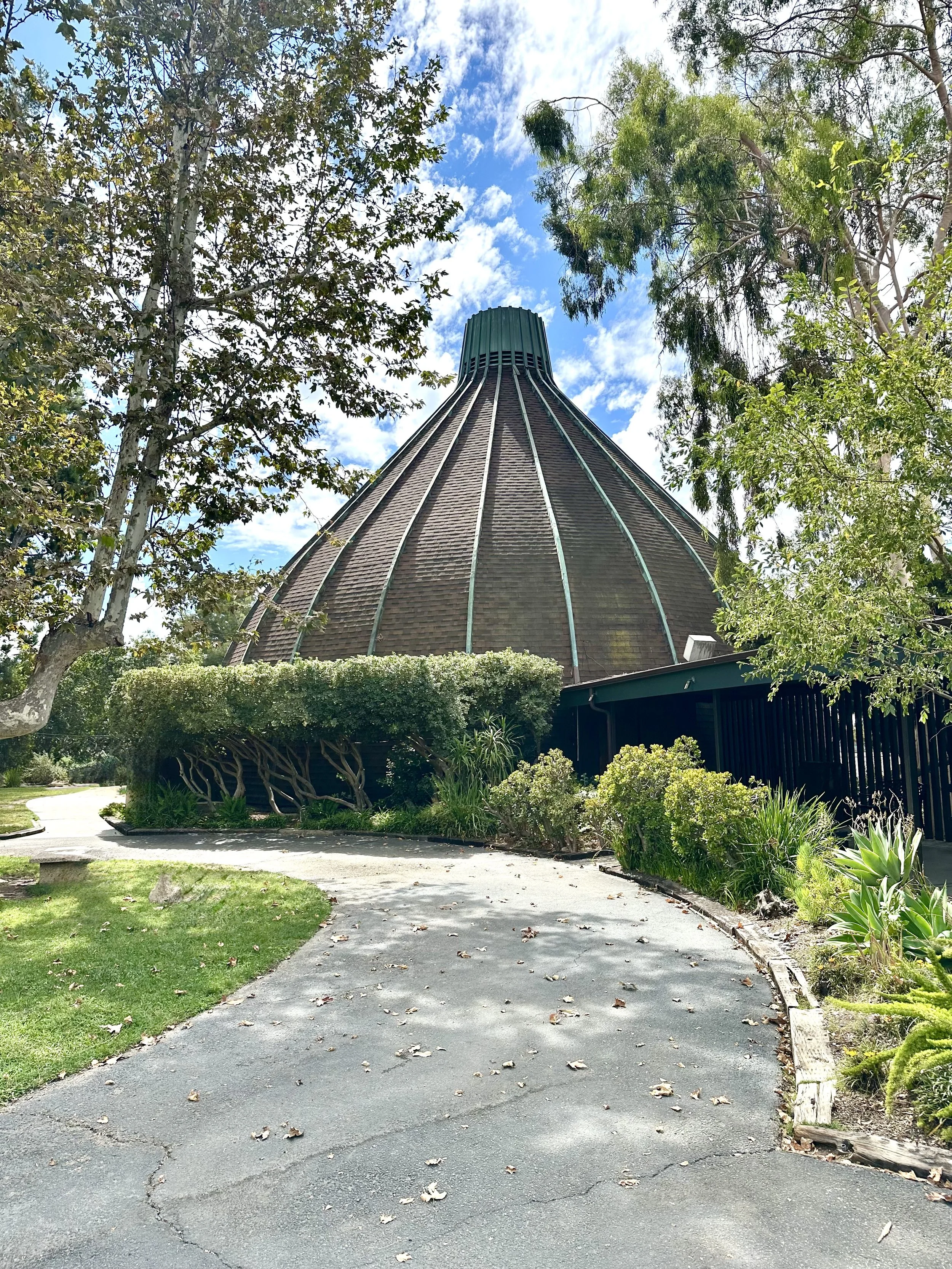
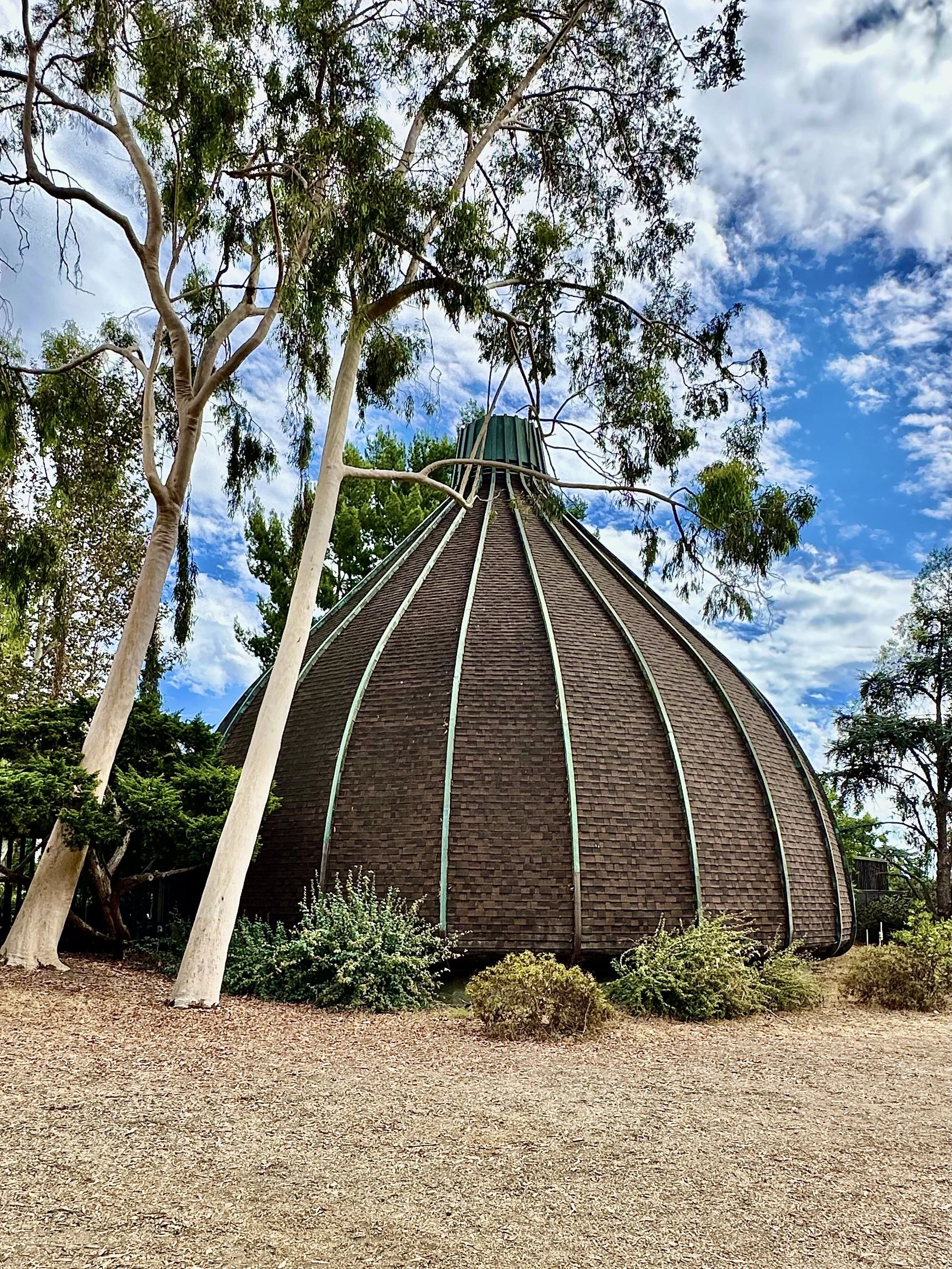
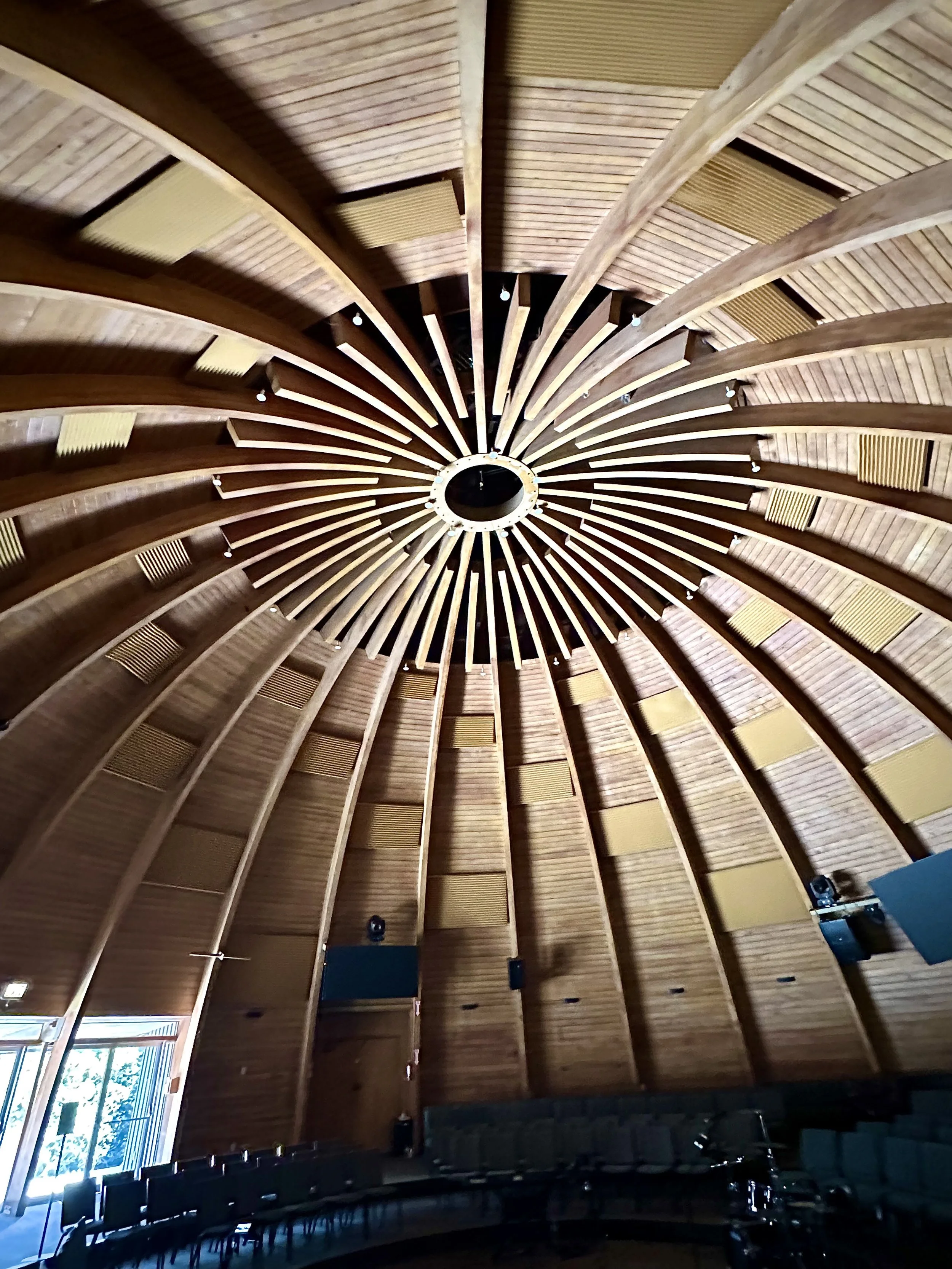
After running an errand in the San Fernando Valkey, I managed to squeeze in a tour of a couple spiritual spaces on the way home. This mid-century “onion” had been on my list for a long time. As luck would have it, I managed to get a peek of the interior, too.
From Mid-Century Modern Architecture Travel Guide: West Coast USA by Sam Lubbell:
The architect, Frank Ehrenthal, a Universalist himself and a student of Richard Neutra, designed the church in the round so every congregant could face each other, with no hierarchy. One of the church’s fundamental principles is inclusiveness.) Inside, the building is lined with a beautiful array of slatted wood, blond laminated beams and copper ros, each still in exquisite condition after all these years.
Geodesic Dome on Colorado Boulevard, Eagle Rock CA
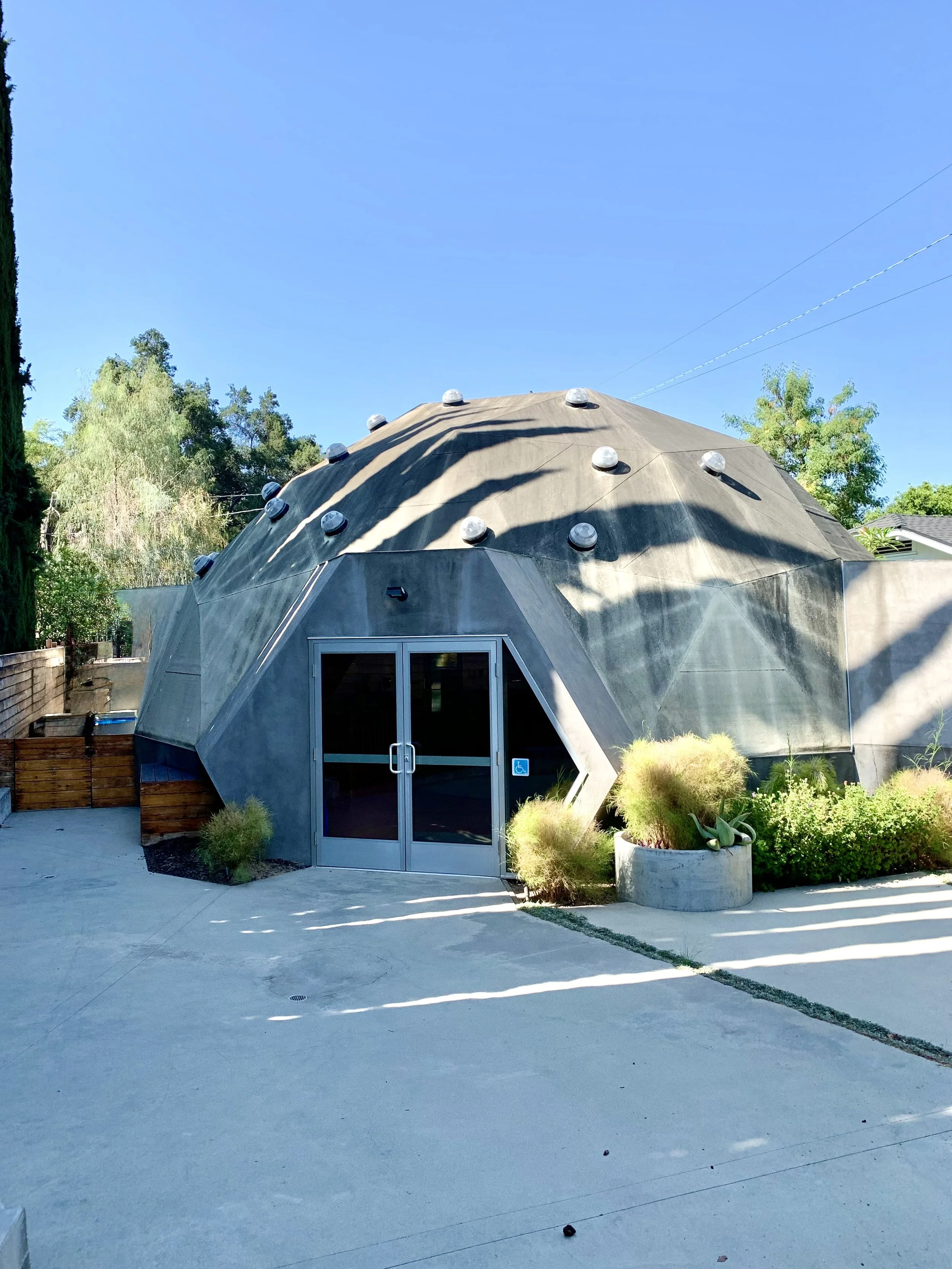
This 39-foot-high 1970s building was built from a kit by Eagle Rock Montessori School Director Ute de Lara and her husband, reports the Eastsider L.A.,adding that at one point the de Laras had decided to tear the whole thing down because it had been in a state of disuse for years and was in a poor condition. The couple was reportedly dissuaded from doing so by a Silver Lake architect who was hired to work on revamping the dome.
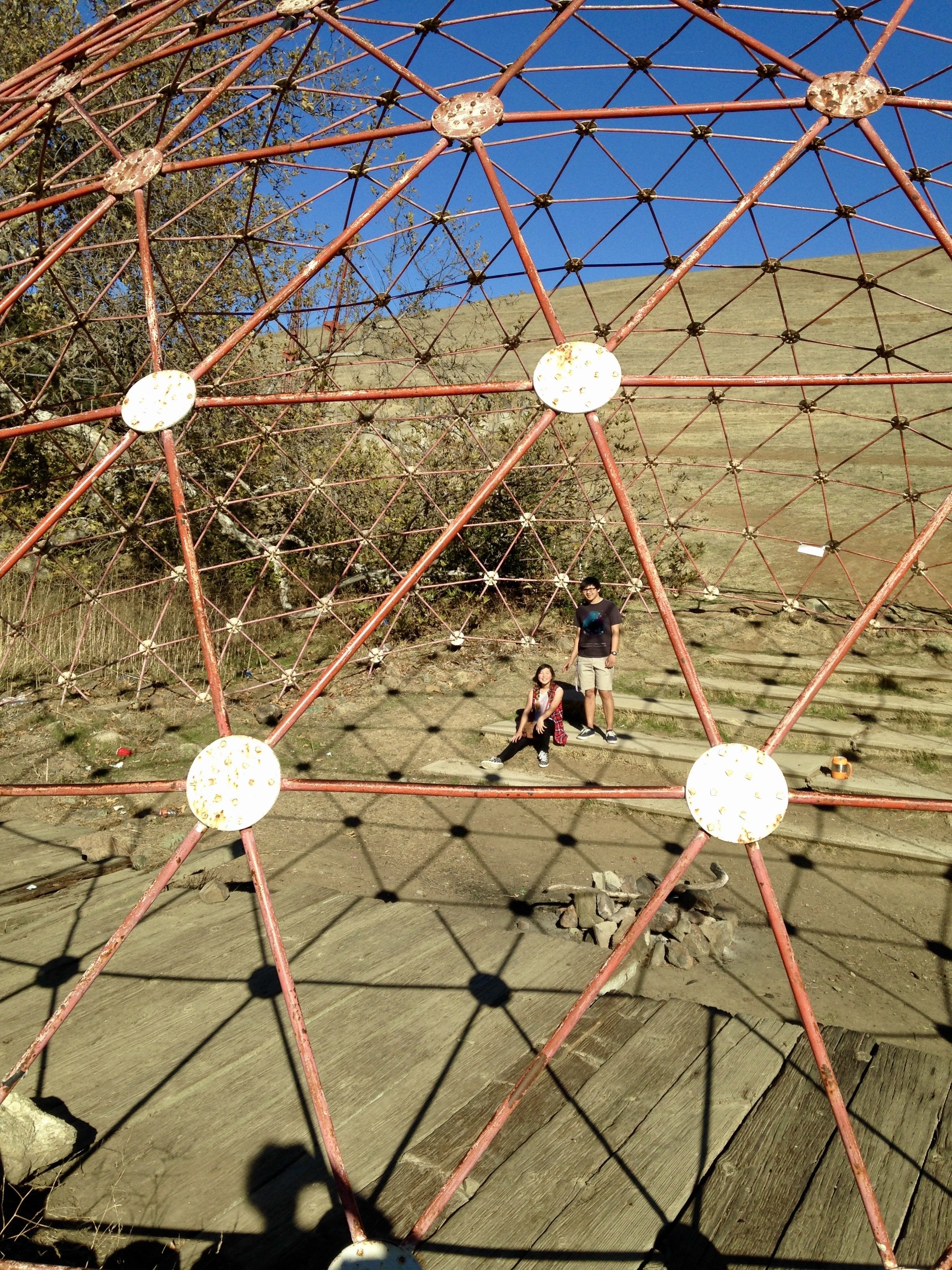
Above, the kiddos, a long time ago, under the geodesic dome in the Cal Poly SLO Architecture Graveyard.